
Carbon-plate running shoes: are they really worth it?
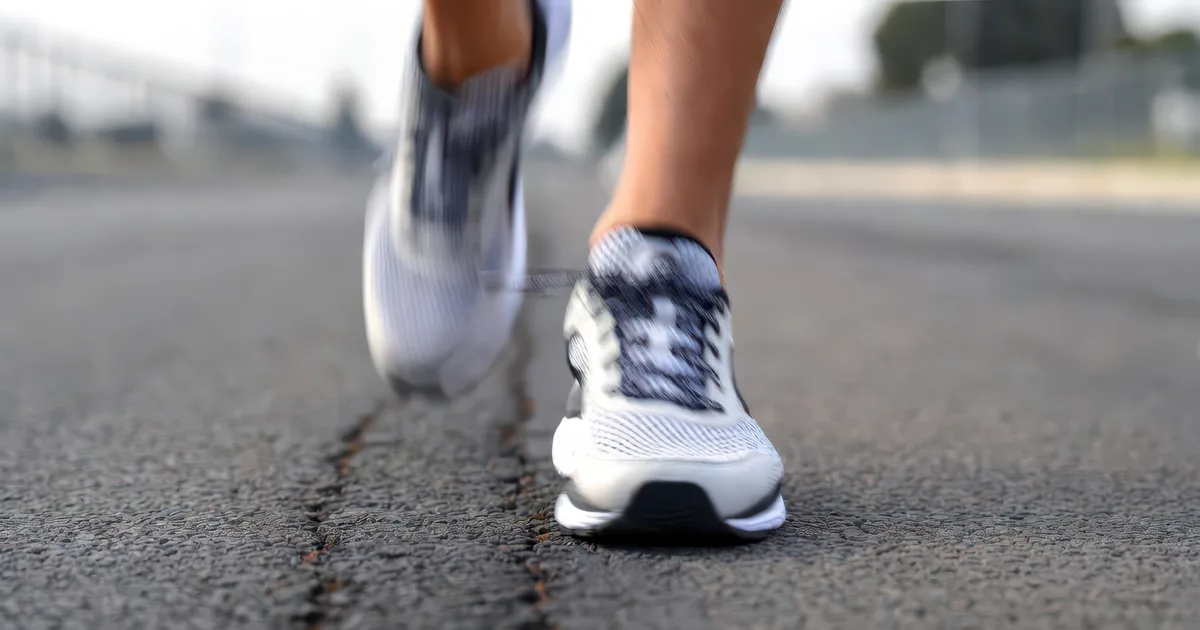
A trial with 30 recreational runners found they improve running economy without worsening biomechanics. Here is what that means and, above all, what it does not.
Carbon-plate running shoes have been a fixture of club-run chatter for years now, usually squeezed between two phrases: "they practically run for you" and "that is technological doping". A recent trial measured what actually happens when a recreational runner, not an elite athlete, puts them on. And the answer, as usual, is more nuanced and less heroic than the shop window suggests.
Thirty everyday runners and three pairs of shoes
The study, published in Scandinavian Journal of Medicine & Science in Sports, had 30 recreational runners test three models: one with a carbon plate and PEBA foam, another with that same PEBA foam but no plate, and a conventional shoe with a TPU midsole, the material we all grew up with. That is the clever part of the design: it separates two things marketing happily blurs together, how much the foam contributes and how much the plate does.
There were two findings, and it is worth keeping them apart. First: the plated model improved running economy. Second: it did not worsen the biomechanical variables the literature links to injury risk, namely vertical loading rate, braking impulse and contralateral pelvic drop, that slight collapse of the hip on the side that is in the air.
What "improves running economy" really means
Running economy is, in short, how much oxygen you burn to hold a given pace. Burning less for the same pace means that, all else being equal, you reach kilometre 15 with a bit more in the bank. The shoe does not run for you: it simply charges you slightly less toll.
Beware the mental leap that comes straight afterwards. An improvement measured in a lab, over a few minutes of controlled running, does not automatically turn into minutes off your marathon. In between sit the heat, the hills, how you slept, whether you bolted off over the first three kilometres and, above all, the training behind you. If you run 40 km a week, your biggest margin is not in the midsole: it is in the plan, and getting your Sunday long run right matters far more than what you have underfoot.
Not worsening biomechanics is not the same as not getting injured
This is the bit that gets mangled the moment the study is squeezed into a headline. The authors say it plainly: they measured acute biomechanics, that is, what happens to the body during the test, not how many injuries showed up six months later. Answering that would mean following a lot of people for a long time, and that study has not been done yet.
Risk variables not spiking is genuinely good news. But an overuse injury is almost never born from a single footstrike: it is born from repeating a slightly different movement a few thousand times. And a plated shoe does change that movement, even if only a little. If you are coming off a season of recurring niggles, that "little" deserves respect and an unhurried transition.
How to decide whether they are worth it for you
- Check your history: if you carry soleus or fascia niggles, phase them in very gradually.
- Count your races per year: if you compete twice, you may not need the crown jewels.
- Save them for intervals and race day, and keep your usual shoe for easy runs.
- Run in them at least three or four times before the race itself.
- Work out the cost per useful kilometre: they are expensive and last less than you think.
- If you are just starting out, invest in consistency and volume before kit.
A shoe is no substitute for the weeks of training. At best, it polishes them.
The Victoris team
The classic mistake: debuting them on race day
The scene repeats every season: new box the week of the race, obligatory photo and, by kilometre 12, a pair of calves that no longer recognise their owner. A plated shoe shifts the workload between ankle, knee and hip, and your body needs a few runs to negotiate that change. Debuting them in competition means handing to chance a day you have spent months preparing.
And if you are at the other end, newly arrived and wondering whether kit will settle the question, the short answer is no: what changes your running life is stringing weeks together without interruptions, which is exactly what a plan to start running from scratch without getting injured is built for. Once that is bedded in and you fancy a goal with a name on it, the 21 km of the Artemisa Challenge are run at your own pace, with no race entries to chase.
So, do I buy them or not?
The honest summary. If you race often, you are chasing a personal best and your injury history is quiet, they make complete sense. If you run for your health, to clear your head and for the coffee afterwards, that money goes further on a decent plan, two strength sessions a week and seven hours of sleep. And if you buy them anyway because they make you happy, no harm done: there are far worse reasons to get out of the door.
Turn those kilometres
into a medal.
Sign up for a Victoris challenge and every training session brings you closer to the medal delivered to your door.
More from the Victoris Diary
 Entrenamiento
Your heart on a six-hour ride: what the Holter monitor saw
A study monitored the hearts of 34 amateur cyclists before, during and after a ride of up to six hours. What they found, why there is no need to panic and which signs do deserve a trip to the doctor.
 Entrenamiento
Strength after 60: two days a week is enough
A meta-analysis went looking for the minimum effective dose of strength training for older adults with sarcopenia, and it was surprisingly small. Here is the full routine, sets and reps included.
 Entrenamiento
Cycling to work: the workout that does not eat into your diary
To coincide with European Mobility Week, we look at what the research says about riding to the office, what you gain and how to start safely without arriving drenched at your first meeting.