
Knee trouble? Cycling loads it far less than running
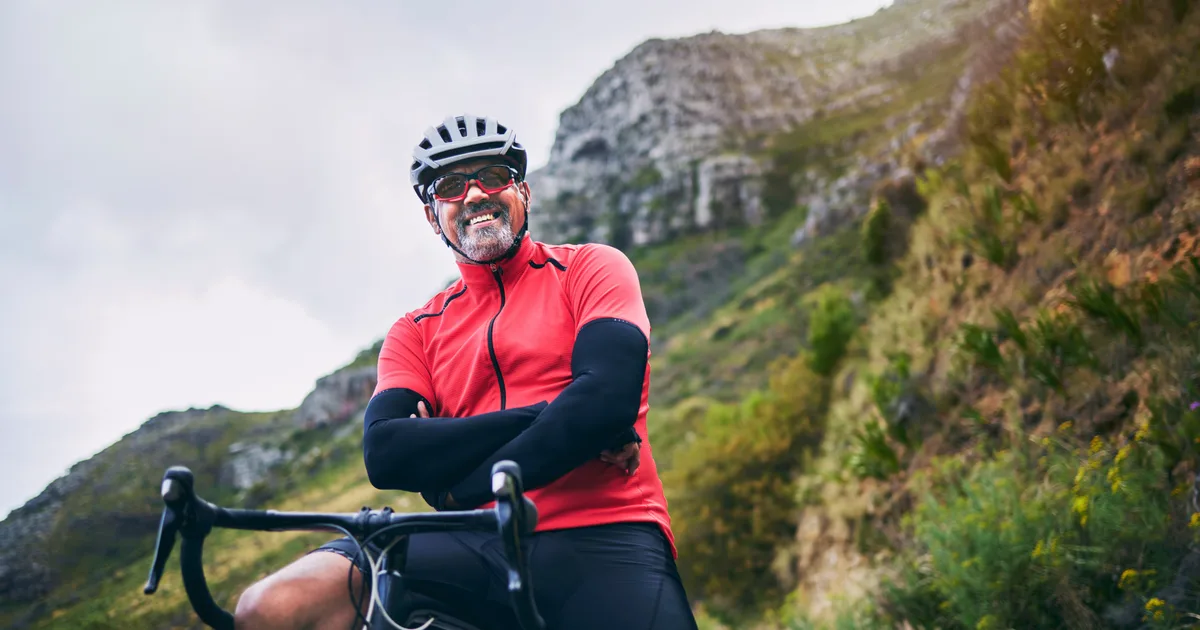
A German study of 56 cyclists, 19 of them with knee osteoarthritis, estimates that cycling loads the joint far less than running and, with osteoarthritis, less than walking too. We cover the figures, the limitations and how to apply it.
"My knee hurts. Do I have to give up sport?" It is one of those questions people ask quietly, often after someone in a consulting room has uttered the word osteoarthritis. A German study has just put figures on something many veteran cyclists suspected: minute for minute, cycling loads the knee considerably less than running and, if there is osteoarthritis, less than walking too.
What they measured
The study, published in the Scandinavian Journal of Medicine & Science in Sports, was carried out in the biomechanics laboratory of the German Sport University Cologne with 56 recreational or competitive cyclists, none of them sedentary: they rode around 6,000 km a year. Nineteen had diagnosed knee osteoarthritis (aged 40 to 65, most at an advanced grade on X-rays), another nineteen were of a similar age and healthy, and eighteen were young and also healthy.
Each participant pedalled at nine combinations of cadence and power (from 60 to 100 revolutions per minute and from about 160 to 260 watts), walked briskly (about 5 km/h) and ran at an easy pace of just over 5:30 minutes per kilometre. Using motion capture cameras plus pedals and force plates that measure loads, the researchers calculated the cumulative load on the knee during one hour of each activity. Rather than looking at the peak of each stride or pedal stroke, they used a model that gives more weight to big impacts, because cartilage, like any material, fatigues more under large loads than under many small ones.
What they found
The results in numbers
- Cycling and walking produced 74 to 77% less flexion-extension load on the knee than running, in all three groups. There was no difference between cycling and walking in that plane.
- In side-to-side load (the kind concentrated on the inner side of the knee, the part that suffers most in osteoarthritis), people with osteoarthritis carried 18 to 62% more load than healthy participants when walking and running. On the bike, there was no difference between groups.
- For those with osteoarthritis, cycling meant 44.5% less of that side-to-side load than walking.
- According to the model, matching the knee load of one hour of walking would take 53 to 120 minutes of cycling at 80 rpm and 210 watts; matching one hour of running would take 194 to 307 minutes.
- For the same calorie expenditure, cycling placed only 18 to 40% of the knee load of walking on the joint, and 19 to 30% of the load of running.
In plain terms: the bike lets you do a lot of aerobic work, the genuinely tiring kind, with little punishment for the joint. That fits with what clinical guidelines already recommend, as they advise aerobic exercise for people with knee osteoarthritis, and it helps explain why so many patients feel better in the saddle.
The caveats, because there are some
Before you sell your running shoes, here are a few buts that the authors themselves point out. The participants were active cyclists with few symptoms, so the results may not apply to someone in a lot of pain, who cannot run or who is starting from scratch. Also, 210 watts is not a gentle ride to the shops: it is a serious pace for a trained club cyclist. Everything was measured in a laboratory, at constant cadence and power, which is nothing like a real ride with hills and traffic lights.
Most importantly, the index they calculate is mechanical, not clinical. They did not measure pain, cartilage on MRI, or how osteoarthritis develops over time. What the study shows is that cycling loads the knee less; whether that translates into less pain or slower progression of osteoarthritis remains to be proven. The study was funded internally by the university and the authors declare no conflicts of interest.
How to apply it on your rides
Practical ideas for knees with a history
- Set your saddle height properly. In the study it was positioned so that the knee was bent about 25-30 degrees with the pedal at the very bottom. A saddle that is too low forces the knee to work more bent; if in doubt, a professional bike fit can help.
- Build volume gradually. The fact that the bike loads the knee less does not mean you can go from nothing to four hours in a week.
- If you combine cycling and running, save the running days for when the knee is settled and use the bike to add aerobic volume.
- Walking is not your enemy. In healthy people, walking and cycling loaded the knee similarly, and moving every day is still one of the best things you can do.
- Do not forget strength work. Cycling does not replace strength training off the bike, as we have explained before.
For more on that last point, read why flat-out hill efforts do not replace weights, and if you are torn between the road and the turbo trainer, here are the reasons why riding outdoors usually wins. And if you fancy putting a scoreboard on your rides, cycling kilometres also count in the Victoris Hermes Challenge.
Finally, the usual reminder, because it matters: the bike is no substitute for a doctor. If your knee swells, locks, gives way when you put weight on it, or hurts at night or more and more, it is time for an appointment before any more kilometres. With a clear diagnosis and a bit of common sense, there are many years of pedalling ahead. And for once, your knee will thank you out loud.
Turn those kilometres
into a medal.
Sign up for a Victoris challenge and every training session brings you closer to the medal delivered to your door.
More from the Victoris Diary
 Entrenamiento
The recreational runner's invisible rival: your city's air
An analysis of more than 2.7 million results from six major marathons links nitrogen dioxide with slower times, especially among recreational runners. What it measures, what it does not prove and what you can decide, without turning it into an excuse to stay at home.
 Entrenamiento
You run and lift weights: do they get in each other's way?
If you run or cycle and also lift weights, you may have been told that one steals from the other. A review of 17 meta-analyses puts that in perspective and helps you organise your week.
 Entrenamiento
Stretch for what it is good for: 20 experts’ guide, in minutes
A consensus of 20 researchers sets out what stretching is good for and at what dose: great for mobility, not much for preventing injury or recovering. We turn it into three routines with their minutes.