
You run and lift weights: do they get in each other's way?
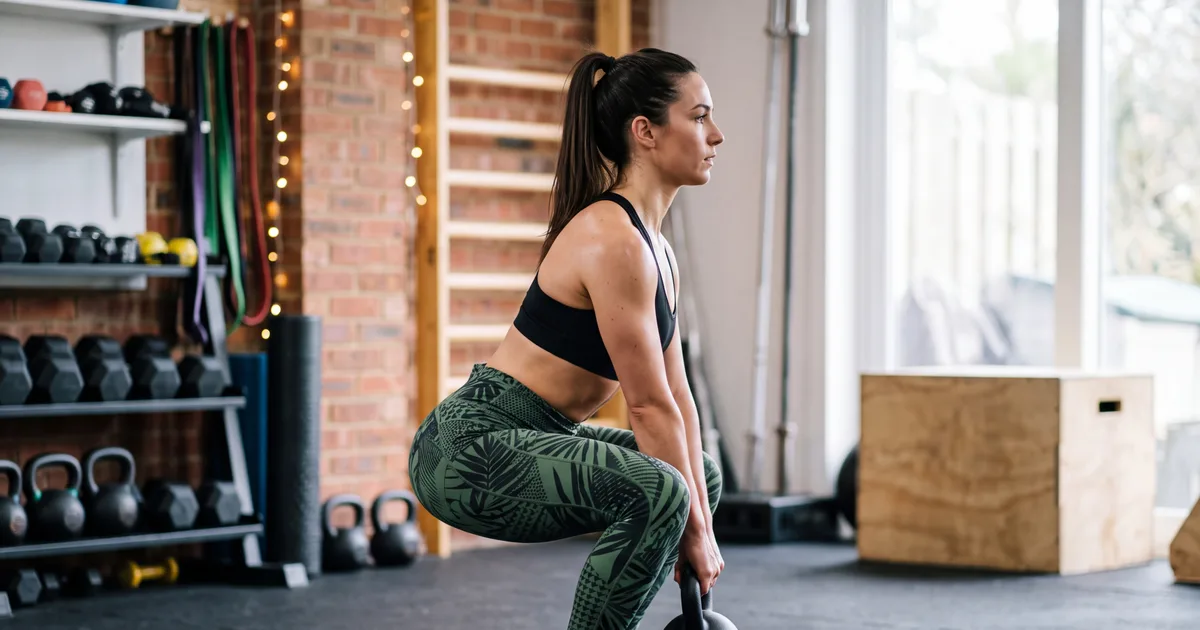
If you run or cycle and also lift weights, you may have been told that one steals from the other. A review of 17 meta-analyses puts that in perspective and helps you organise your week.
There is a saying that has done the rounds of gyms and running clubs for decades: «cardio eats your gains». And its mirror image: «weights make you too heavy to run». The result: people who run and lift nothing out of fear, and people who lift and do not run for the same reason. A review published in 2026 takes a good deal of the drama out of it.
The famous interference effect
Concurrent training is the technical name for what you do when you combine strength work (weights, machines, bodyweight exercises) with endurance (running, cycling, swimming). For decades people have talked about the «interference effect»: the idea that mixing both stimuli means one holds back the adaptations of the other, especially strength.
What Steffen Held's team has done in the journal Sports Medicine is an umbrella review: rather than analysing studies one by one, it brings together 17 meta-analyses which, between them, cover 144 studies and 1,492 healthy adults. In other words, a bird's-eye view of almost everything that has been researched on the subject.
What they found
In a nutshell
- Compared with endurance training alone: combining improves aerobic capacity just as much and, on top of that, you gain more strength.
- Compared with strength training alone: gains in strength, power and muscle are similar, and you improve your aerobic fitness too.
- The order within a session showed no significant effects, although there is a slight trend in favour of doing strength first when your aim is to gain strength or muscle.
In plain English: for the vast majority of people who train for health, for fun or to prepare for their local race, combining both pays off. You do not lose what you feared and you gain what you did not have. And it is not just about performance: strength pays off in health too, as we saw when we explained that lifting weights adds years to your life.
The honest caveat: these studies involve healthy adults over weeks or months, not elite athletes squeezing out the last watt. If you compete in weightlifting or are training for a sub-three-hour marathon, the maths may be finer. For everyone else, the message is reassuring.
Weights first or run first?
It is the million-dollar question, and the review's answer amounts to «do not stress about it». An earlier meta-analysis had already pointed to a small advantage in doing strength first for lower-body strength gains, and this review sees the same trend, but without significant differences. So the practical rule is simple: start with whatever matters most to you that day.
How to decide the order
- If your priority is gaining strength or muscle: weights first, cardio afterwards.
- If it is a key running or cycling session that day (intervals, hills, long run): do that first, on fresh legs.
- If you can separate them by several hours (morning and evening) or do them on different days, the dilemma disappears.
- And if you only have 45 minutes, do both: the combined session you actually do beats the perfect one you skip, hands down.
A sample week for runners and cyclists
A rough guide, to be adapted to your life and not the other way round:
Example with 4 or 5 training days
- Monday: full-body strength (squat or leg press, Romanian deadlift, row, press and plank), about 40 minutes.
- Tuesday: a quality running or cycling session, such as intervals or hills.
- Wednesday: rest or an easy run.
- Thursday: strength again, with a little less load on the legs if you have a long run at the weekend.
- Saturday or Sunday: easy long run, lengthening it gradually.
To make that long run grow without nasty surprises, here is how much to lengthen your Sunday run based on what you have run over the past month.
Looking for an excuse to keep up the cardio while you stick with the weights? Victoris's Hades Challenge invites you to log 50 km running, walking, cycling or swimming at your own pace, with a medal at the end: a concrete goal for the aerobic part of your week.
So no: weights will not turn you into a slow wardrobe, and running will not leave you skin and bone. Combine them sensibly, start with whatever matters most that day and, above all, do both.

You already have your challenge.
All that's left is to start it.
Join this challenge and every workout gets you closer to your medal.
More from the Victoris Diary
 Entrenamiento
Stretch for what it is good for: 20 experts’ guide, in minutes
A consensus of 20 researchers sets out what stretching is good for and at what dose: great for mobility, not much for preventing injury or recovering. We turn it into three routines with their minutes.
 Entrenamiento
What the UCI wants you to eat when you are off the bike
The Union Cycliste Internationale has published its position statement on nutrition. Beyond what is in your jersey pockets: eating enough, looking after your bones and which supplements are genuinely backed by evidence.
 Entrenamiento
Helmet, lights and 1.5 metres: your bike and October’s new rules
Spain’s reformed road traffic regulations come into force on 1 October: helmets for every cyclist outside towns, new rules in the city and a checklist for your first autumn ride.