
Stretch for what it is good for: 20 experts’ guide, in minutes
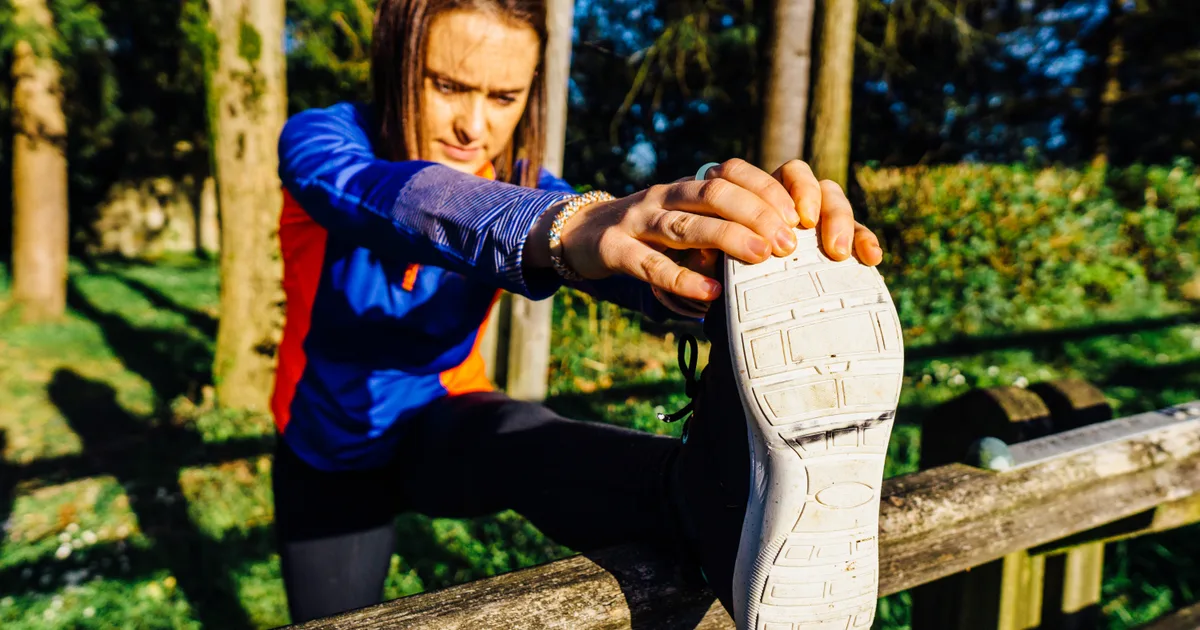
A consensus of 20 researchers sets out what stretching is good for and at what dose: great for mobility, not much for preventing injury or recovering. We turn it into three routines with their minutes.
Stretching is one of those things we all do «just because»: before a run, after a run, leg propped on a park bench while scrolling on our phone. Twenty international researchers have agreed on what it is really good for and at what dose. Spoiler: it is good for fewer things than you thought, but what it is good for, it does well. Here are their conclusions turned into minutes.
Where these recommendations come from
It is a Delphi consensus published in the Journal of Sport and Health Science: a method in which a panel of experts votes and revises its answers over several rounds until it reaches agreement. Twenty of the 23 invited researchers took part, and their recommendations are aimed mainly at healthy people.
What stretching does not do (according to the experts)
Let us start with the bad news, so the rest is all good. The panel does not recommend stretching to prevent injuries in general: it may slightly reduce muscle injuries, but not the overall risk. Nor does it recommend it as a way to recover after training (the evidence is weak, so if it feels good, that is a matter of taste) or to correct posture.
To gain strength or muscle mass, stretching is not the main route either: you would need to stretch at least 15 minutes per muscle, five days a week, for six weeks to see small effects. If you want fewer injuries and more strength, that time goes much further on a strength routine at home, with no equipment.
What it is good for: gaining mobility
Where stretching shines is in improving the range of motion of your joints, which is no small thing: flexibility is one of the five components of physical fitness. To gain it in the long term, the panel prefers static stretching (holding the position) or PNF (contracting and relaxing the muscle while you stretch it) over dynamic stretching.
Three routines, with their minutes
1 · To gain mobility (the «proper» routine)
- Static or PNF stretching, 2 to 3 sets a day.
- Hold each stretch for 30 to 120 seconds per muscle.
- A 10-minute example: hamstrings, quads, calves, hip flexors and chest, 2 sets of 30-60 seconds each.
- What counts is weekly volume: 10 minutes almost every day beats an hour on Sunday.
- Tension yes, pain no: you should feel the stretch without gritting your teeth.
2 · As part of your warm-up
- It is not essential: an easy jog or a foam roller has similar effects.
- If you like to stretch beforehand, 2 sets of 5 to 30 seconds per muscle are enough.
- Combine it with movements similar to what you are about to do.
3 · Before reps, jumps or an explosive effort
- Avoid holding a static stretch for more than 60 seconds per muscle.
- Go for short static stretches or dynamic ones (leg swings, lunges) within your warm-up.
- Save long stretches for another time of day or for afterwards.
A couple of bonus facts
The consensus also covers lesser-known uses, with fairly demanding doses: reducing muscle stiffness requires more than 4 minutes of static stretching per muscle, and for vascular health, regimes of 15 minutes per muscle, five days a week, have been studied, although the evidence there is still limited. Not something you will do during your coffee break, but it illustrates the main idea: the effect depends on the dose.
In short: stretching is neither a penance nor a fully comprehensive insurance policy. It is a specific tool for moving with a greater range. Use it for that, with its minutes, and let strength training take care of the rest.
Turn those kilometres
into a medal.
Sign up for a Victoris challenge and every training session brings you closer to the medal delivered to your door.
More from the Victoris Diary
 Entrenamiento
What the UCI wants you to eat when you are off the bike
The Union Cycliste Internationale has published its position statement on nutrition. Beyond what is in your jersey pockets: eating enough, looking after your bones and which supplements are genuinely backed by evidence.
 Entrenamiento
Helmet, lights and 1.5 metres: your bike and October’s new rules
Spain’s reformed road traffic regulations come into force on 1 October: helmets for every cyclist outside towns, new rules in the city and a checklist for your first autumn ride.
 Entrenamiento
Carbon-plate running shoes: are they really worth it?
A trial with 30 recreational runners found they improve running economy without worsening biomechanics. Here is what that means and, above all, what it does not.