
What the UCI wants you to eat when you are off the bike
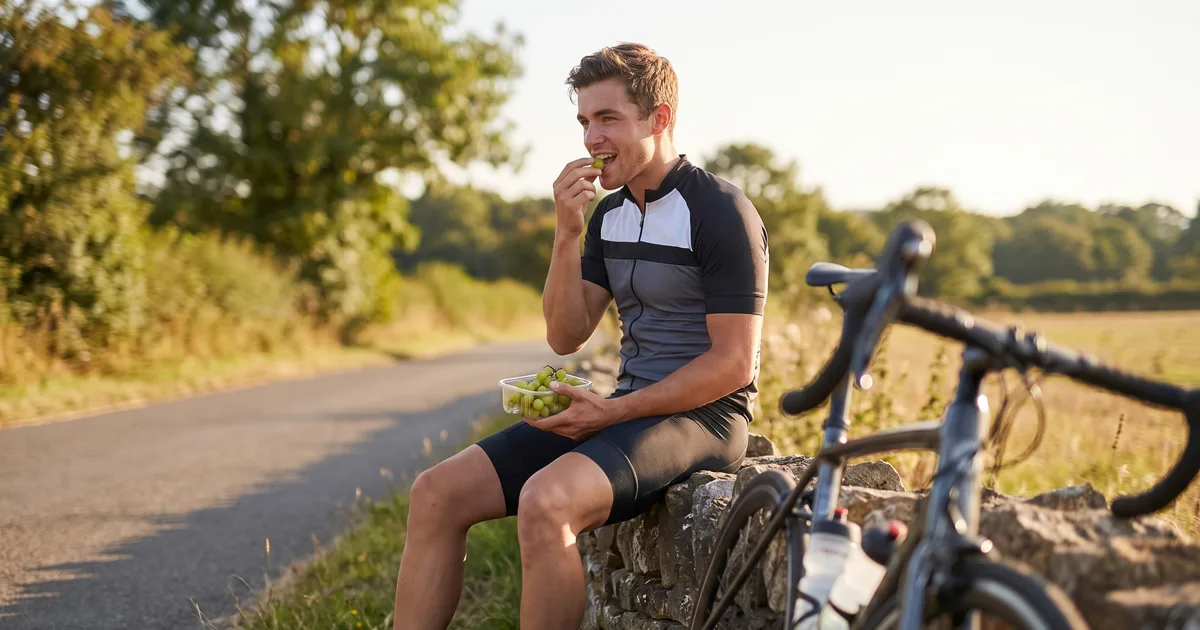
The Union Cycliste Internationale has published its position statement on nutrition. Beyond what is in your jersey pockets: eating enough, looking after your bones and which supplements are genuinely backed by evidence.
If you ride a bike, you have probably got your jersey pockets sorted: the banana, the bar, the bottle with something in it. But the Union Cycliste Internationale has just published its official position statement on nutrition, and the underlying message goes further: what happens at the table, day to day and in the hours after you get off the bike matters as much as what you eat on it. Here is which parts of a document written for professionals are useful to the Sunday club rider.
A consensus with 54 brains behind it
The statement was published on 15 September in the International Journal of Sport Nutrition and Exercise Metabolism and is the crowning piece of the UCI Sports Nutrition Project. A steering committee pooled the expertise of 54 researchers, who had previously written 14 topic-specific reviews covering every kind of cycling: road, track, gravel and even esports. The position statement condenses it all into ten broad themes, including preparing for performance, fuelling in competition, recovery and adaptation, energy availability, body composition, protection against injury and illness, supplements, and differences by age and sex.
It is written for the elite, and that is worth saying plainly. But several of its ideas apply just as much, or more, to someone who rides three times a week and fits the bike around a job, a family and a fridge that no team chef is managing. We covered grams of carbohydrate per hour a few weeks ago, so today we are getting off the bike.
The problem with eating too little (even if the scales are smiling)
This is the point that should make you raise an eyebrow. The project’s review on body composition and energy describes cyclists as a very weight-conscious group, in which restrictive eating behaviours are frequently reported. The reasoning is familiar: fewer kilos, faster climbing. The trouble starts when you train a lot and eat little at the same time, because your body is left without enough energy for everything else. That has a technical name: low energy availability.
When it drags on, the authors link it to negative consequences for both health and performance. That is why their recommendations are, in their own word, pragmatic: pursue your physique goals without losing sight of long-term health and well-being. In real life: if recovering is getting harder, you are always tired and the scales are your main measure of form, perhaps the problem is not what you eat on the bike but what you are not eating off it.
Your bones, the cyclist’s unfinished business
Here is a fact that surprises many people: as a group, cyclists tend to have lower bone mass than other athletes and even than people who do no sport at all. The review devoted to bone talks about a “perfect storm”. Pedalling is a non-impact exercise that barely stimulates bone, long rides cause a temporary increase in bone breakdown, and eating too little or badly finishes the job. Add to that the fact that many endurance cyclists are naturally slight.
The proposals are sensible and nothing exotic: enough energy, carbohydrate, protein, calcium, vitamin D and the other key micronutrients; adding brief bouts of impact, such as a few jumps, to your training now and then; and sleeping and recovering properly. And one idea we particularly like: the responsibility should not fall on the rider alone, but also on teams and governing bodies, through screening and education.
Eat for the day you have
Another of the reviews makes the case for so-called nutritional periodisation: adjusting energy and carbohydrate meal by meal and day by day according to the training planned, rather than always eating the same. For protein, in elite athletes, it sets a minimum of 1.6 to 2.1 grams per kilo of body weight per day, both to cover what is used while riding and to repair muscle.
Be careful about copying that figure blindly: it is designed for people with training volumes most of us only see on television. What does help you is the logic behind it: on a long-ride or interval day, more carbohydrate on the plate; on a rest day, no fear of food, but no need to fill the tank as if you were about to cross the Pyrenees. If you are already planning your season like a cyclist, food deserves a place in that calendar just like the kilometres.
Supplements: it is a short list
The project’s review on supplements acknowledges that they have become ubiquitous across all cycling disciplines, and it sets out their safety risks and the danger of inadvertent doping. The list of those with a strong evidence base fits on one line: caffeine, creatine, sodium bicarbonate, beta-alanine, dietary nitrate and glycerol. Ketones, so fashionable in the peloton, are classed as emerging, which is the polite way of saying “not proven yet”.
And a curious nuance from the periodisation review: some compounds sold to help you recover or sleep better might blunt training adaptations. In other words, recovering “too well” from a capsule is not always good news. If you are thinking of taking something, make sure it makes sense for what you do, take advice from a registered dietitian and check that the product is quality-tested.
What to take home
- Eat enough: performing and losing weight at the same time has its limits, and your health comes first.
- Match your plate to the day: more carbohydrate for long or hard rides, less when you rest.
- Look after your bones: calcium, vitamin D and some impact away from the bike.
- Prioritise recovery: a proper meal after demanding rides, and enough sleep.
- Before buying a supplement, ask whether it is backed by evidence and whether it is certified.
- If the tiredness will not go away or injuries keep coming back, see a professional.
A goal for your autumn kilometres
None of this is about eating like a professional; it is about eating like someone who wants to keep riding for many years. And if you fancy setting a target for this season’s rides, the Hermes Challenge invites you to clock up 300 km at your own pace, with no deadline and a medal at the end. Just make sure the tank is full.

You already have your challenge.
All that's left is to start it.
Join this challenge and every workout gets you closer to your medal.
More from the Victoris Diary
 Entrenamiento
Helmet, lights and 1.5 metres: your bike and October’s new rules
Spain’s reformed road traffic regulations come into force on 1 October: helmets for every cyclist outside towns, new rules in the city and a checklist for your first autumn ride.
 Entrenamiento
Carbon-plate running shoes: are they really worth it?
A trial with 30 recreational runners found they improve running economy without worsening biomechanics. Here is what that means and, above all, what it does not.
 Entrenamiento
Your heart on a six-hour ride: what the Holter monitor saw
A study monitored the hearts of 34 amateur cyclists before, during and after a ride of up to six hours. What they found, why there is no need to panic and which signs do deserve a trip to the doctor.