
Cyclists: flat-out hills don't replace the weights room
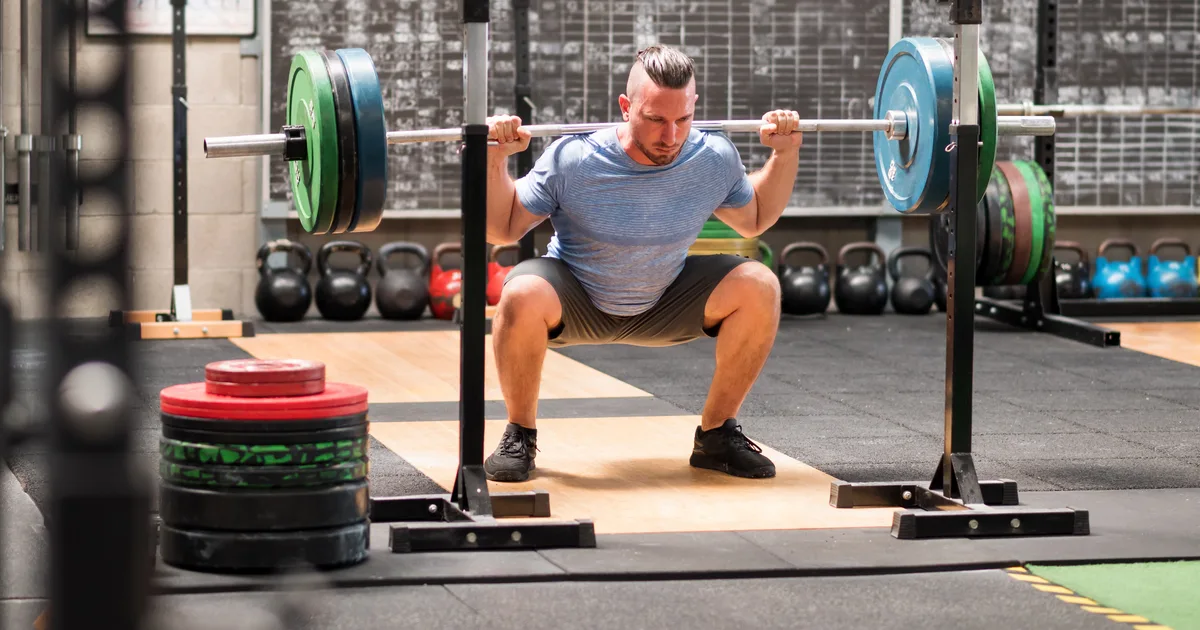
Twelve weeks, two groups and an awkward result: those who went to the gym improved their power; those who did strength work only on the bike didn't. Here's the routine.
There's a belief among cyclists so logical-sounding that almost nobody challenges it: if I want more strength while pedalling, surely I should build strength while pedalling. Standing-start sprints, climbs in a big gear, grinding uphill out of the saddle. Why on earth would I go to a gym and do squats when the bike already gives me all that? Well, one trial put both options head to head. And the bike didn't win.
The experiment: gym versus hills
The study, published in the journal British Medical Bulletin and available on PubMed Central, took 19 young off-road cyclists and split them into two groups for 12 winter weeks. Both carried on with their usual endurance training and both added two strength sessions a week. The difference was where.
The gym group did half squats, deadlifts, dumbbell lunges and Bulgarian split squats, with progressive loads. The bike group did maximal standing-start sprints on a 4-5% climb, in a fixed gear, starting from zero and building cadence to 90 revolutions, twelve seconds per repetition. On paper the second option looks more specific, if anything: it's strength applied to exactly the movement you care about.
What happened after twelve weeks
The gym group significantly improved relative mean power output in the 30-second Wingate test. The bike group didn't. In the incremental test, the gym group improved both maximum power achieved and power at the anaerobic threshold, with statistically emphatic differences. The bike group didn't shift there either.
Curiously, vertical jump improved in neither group, which is a useful reminder: strength isn't a single abstract quality that spills over onto everything you do. It shows up where you train it and where you can apply it.
The routine, exactly as it was done
Here's the actionable part. If you want to replicate the protocol used by the group that did improve, this is what they did, week by week.
Twelve weeks of strength work for cyclists
- Two sessions a week, always on top of your bike training, never instead of it.
- Four exercises: half squat, deadlift, dumbbell lunge and Bulgarian split squat, going down to roughly 90° of knee flexion.
- Weeks 1 to 6: 4 sets of 12 reps at 65-75% of your one-rep max.
- Weeks 7 to 12: 2 sets of 4 to 6 reps at 75-85%. Less volume, more load.
- Generous rest: 2.5 minutes between sets and 5 minutes between exercises. This isn't a circuit, don't rush it.
- Place them well away from your quality rides and your long weekend outing, so each does its job on its own day.
That block fits far better if you've mapped your season out in blocks rather than improvising week by week: twelve winter weeks, with bike volume slightly reined in, is exactly the gap where this work makes sense.
The small print, which also counts
Time to be honest about the study's limits, because they matter. There were 19 participants, aged 13 to 16, riding off-road. That's neither a large sample nor you, aged 44, heading out with the club on Saturdays. What this trial shows well is the direction of the effect: heavy gym strength work shifted power markers that bike-specific strength work did not. What it doesn't show is the exact magnitude you'd see in an adult amateur.
And one recommendation that isn't in the study but is in plain common sense: if you've never deadlifted or squatted under load, spend the first two weeks learning the technique with someone who knows what to look for. A percentage of your one-rep max only means something if you worked that max out while moving well. Weights are less forgiving than a hill.
So should I stop attacking climbs?
No. Hill sprints still train valuable things and they're enormous fun, which is worth something in itself. What this trial says is that they aren't interchangeable with weights: if you were hoping that battering up the hill out of the village would save you a gym membership, the short answer is that it won't. Two hours a week with a barbell, in winter, are worth rather more than they look.
Turn those kilometres
into a medal.
Sign up for a Victoris challenge and every training session brings you closer to the medal delivered to your door.
More from the Victoris Diary
 Entrenamiento
Carbon-plate running shoes: are they really worth it?
A trial with 30 recreational runners found they improve running economy without worsening biomechanics. Here is what that means and, above all, what it does not.
 Entrenamiento
Your heart on a six-hour ride: what the Holter monitor saw
A study monitored the hearts of 34 amateur cyclists before, during and after a ride of up to six hours. What they found, why there is no need to panic and which signs do deserve a trip to the doctor.
 Entrenamiento
Strength after 60: two days a week is enough
A meta-analysis went looking for the minimum effective dose of strength training for older adults with sarcopenia, and it was surprisingly small. Here is the full routine, sets and reps included.