
Your autumn sportive: how to pick one and finish it
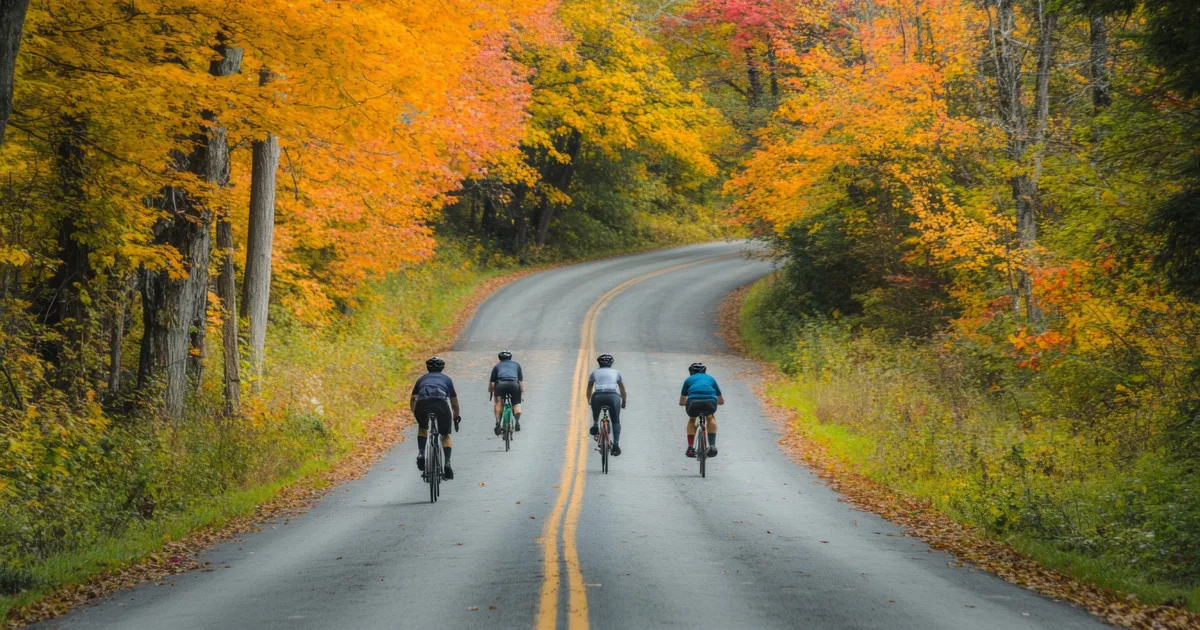
Eleven cycling sportives are left in Spain between September and October, from 54 to 167 kilometres. Here is how to choose yours based on what you have actually ridden this summer, plus a six-week plan so you do not climb off halfway.
September is the best time of year to ride and the worst time to make decisions. You are carrying summer fitness, the weather is glorious, and a friend texts you a link to a 160-kilometre sportive with 3,000 metres of climbing. Emboldened, you say yes. Let us avoid that, while there is still time.
What is left on the calendar
According to the calendar published by Ciclismo a Fondo, around eleven events remain between September and October, with distances ranging from 54 to 167 kilometres. There is something for every taste and, more to the point, for every level.
With confirmed dates
- Marcha Hermanos Herrada, Cuenca, Saturday 3 October: 120 km.
- Vuelta Ciclista a Lanzarote, 3 and 4 October: two stages of 115 and 74 km.
- Gran Fondo La Nucia, Alicante, Sunday 18 October: 132 km.
- Volta Cicloturista Internacional a Menorca, 23 to 25 October: a prologue and two stages.
- Orbea Gravel Rioja Alavesa, Laguardia, Saturday 24 October: 102 and 54 km.
Still awaiting confirmed dates when the calendar was published are the Larra-Larrau in Isaba (146, 100 and 60 km), the Gran Fondo Alberto Contador in Oliva (147 km), the Ribeira Sacra in Luintra (120 and 75 km), the Mussara 24H at Jarama, the Vuelta Cicloturista a Ibiza (74 and 60 km) and the Mussara at Villanueva del Pardillo (167 and 108 km). Before you enter, confirm the date and start time on the event's own website: these things move.
Choose the distance with your head, not your heart
The rule of thumb that works best is simple: look at your longest ride this summer, the real one, not the one you meant to do. A sportive somewhere between 20% and 40% longer than that is demanding but reasonable. Double is not a challenge: it is a very long afternoon pushing your bike.
And look at the climbing before the kilometres. A flat 120 km and a 120 km with two big climbs are different sports. If the profile has more spikes than an ECG, mentally subtract kilometres and add hours.
Six weeks, no gimmicks
If the event you have chosen falls in mid or late October, you have exactly the right window. Three rides a week are enough if they are well spread: one long, one with quality, one easy.
The six-week plan
- Week 1: the long ride matches your longest of the summer. The quality ride, 3 blocks of 8 minutes at a comfortably hard pace. The easy one, 45-60 minutes of steady riding.
- Week 2: the long ride goes up 10%. In the quality ride, 5 blocks of 4 minutes climbing, seated, without blowing up.
- Week 3: the long ride goes up another 10%. In the quality ride, 2 blocks of 20 minutes at the pace you expect to hold on the day.
- Week 4: recovery week. The long ride drops to 70% of the previous one and the quality ride becomes steady riding. This is where the work is absorbed.
- Week 5: the longest ride of the whole plan, 70% to 80% of the event distance, eating and drinking exactly what you will use on the day.
- Week 6: halve the volume, keep a couple of short efforts so you do not go stale, and rest. Arriving keen is part of the training.
That week 5 ride is the most important and the one most people skip. It is not just a long ride: it is the dress rehearsal for your feeding, your shorts, your chamois cream and your gels. Anything that is going to fail is much better failing there.
And if the plan feels light, or you are starting further back, we have a fuller version in eight weeks on the bike to stop suffering. With two extra weeks, everything fits more comfortably.
What kilometres alone will not fix
There is a classic temptation in these six weeks: hammer the climbs and assume that covers your strength work. It does not, and we explained why calmly when we argued that full-gas climbs are no substitute for weights. Two short gym sessions a week, especially in the first four, show up in the final third of the event.
Then the boring things, which are the ones that decide the day: service the bike a week beforehand rather than the night before, eat something every 45 minutes from the start even if you are not hungry, drink before you are thirsty, and pack for two temperatures, because in October you set off in gloves and finish in short sleeves.
If a sportive is not on the cards this year
Maybe the date, the budget or the prospect of a Sunday dawn drive to Cuenca does not work for you. That is fine: the kilometres count just the same without a race number. The Zeus Challenge, at 150 km, is roughly the equivalent of a gran fondo, only spread across several weeks and with nobody breathing down your neck in an echelon.
Whatever you choose, choose it this week. October events are built in September, and September is already here.

You already have your challenge.
All that's left is to start it.
Join this challenge and every workout gets you closer to your medal.
More from the Victoris Diary
 Entrenamiento
Stretch for what it is good for: 20 experts’ guide, in minutes
A consensus of 20 researchers sets out what stretching is good for and at what dose: great for mobility, not much for preventing injury or recovering. We turn it into three routines with their minutes.
 Entrenamiento
What the UCI wants you to eat when you are off the bike
The Union Cycliste Internationale has published its position statement on nutrition. Beyond what is in your jersey pockets: eating enough, looking after your bones and which supplements are genuinely backed by evidence.
 Entrenamiento
Helmet, lights and 1.5 metres: your bike and October’s new rules
Spain’s reformed road traffic regulations come into force on 1 October: helmets for every cyclist outside towns, new rules in the city and a checklist for your first autumn ride.