
Knowing sport is good for you will not make you consistent
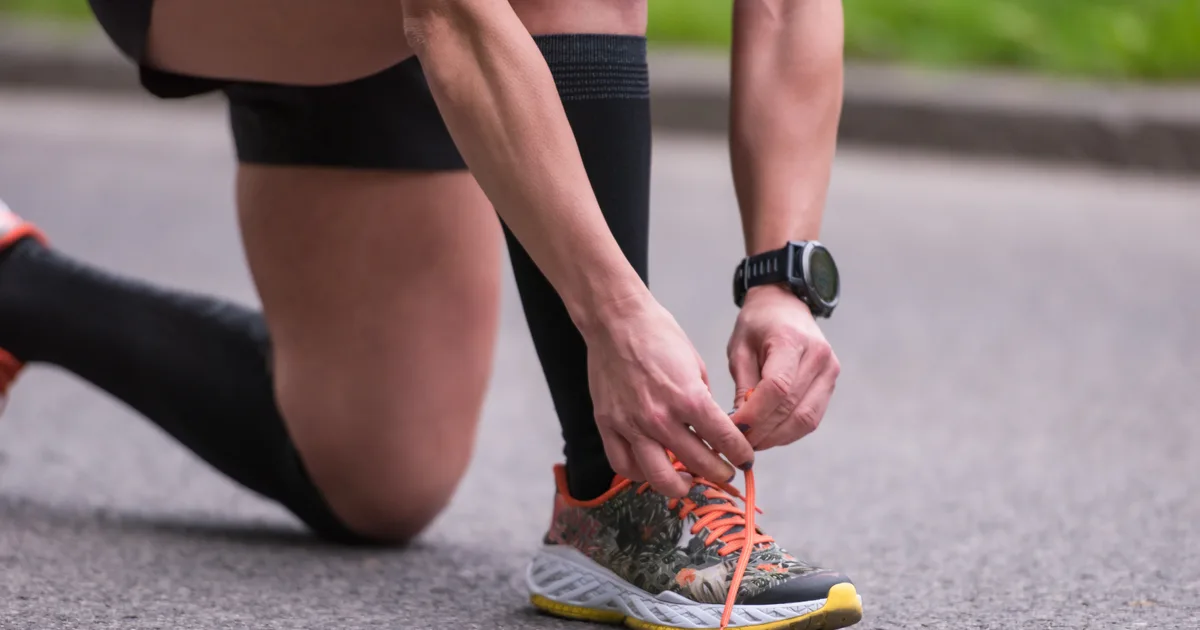
A study of 2,677 students identified four motivational profiles and tested which ones sustain the habit. The result stings: understanding that exercise is good for you is not enough, and training under external pressure is not either.
September is the month of good sporting intentions, and October is the month most of them die in. A study published on 27 July 2026 in Frontiers in Psychology went looking for why, and the answer it found is more uncomfortable than we expected: the people who drop out are not the ones who are unaware of the benefits of exercise. Quite often they know them by heart.
Four ways of wanting to move
The authors surveyed 2,677 university students from 20 universities in the Chinese province of Sichuan, split almost exactly between men and women, using two validated questionnaires: one on motivational regulation in exercise and one on adherence. Rather than asking "are you motivated?", which means very little, they looked for patterns. Four came out.
The largest group, 42.51%, had high autonomous motivation: very little amotivation, very little external pressure and high levels of everything else. Some 25.33% made up the amotivated and controlled profile, the ugly combination: plenty of amotivation, plenty of external pressure and little motivation of their own. Another 16.66% ran mainly on pure intrinsic motivation, because they enjoy it and that is that. And 15.50% fitted the identified regulation profile: people who understand perfectly well that exercise is valuable and matters for their goals, but who do not enjoy it one bit.
The finding that stings
That last group is the interesting one, because it is where a lot of us live. Recognising that exercise is valuable, having the rational argument down pat, knowing the studies, understanding that your health depends on it, was not enough on its own to sustain the practice. Only the profiles with high autonomous motivation kept the habit going.
The combination that predicted high adherence was very specific: the absence of amotivation, the absence of external regulation and the presence of intrinsic motivation. And the reverse pattern predicted the opposite with even greater consistency. Translated: it is not enough to remove the excuses, you also have to remove the pressure, and on top of that put in something you actually like. All three at once.
A word on scope, because honesty is worth more here: the sample is Chinese university students, not British adults with a mortgage and two kids. The percentages for each profile do not transfer as they are. What does travel well is the mechanism, because it lines up with what self-determination theory has been describing for decades and, most likely, with your own experience.
External pressure includes the pressure you put on yourself
When we think of "external regulation" we picture somebody forcing us. In practice it is almost always us: Monday morning on the scales, the training partner who is quicker, the challenge you signed up for without really wanting to because saying no felt like too much effort, next August and the photos. All of that works for a couple of weeks and then it weighs.
It is exactly why, deep down, routine beats motivation: routine does not ask you to feel anything in order to work, and behaviours held up by small, repeated changes do not depend on a hit of enthusiasm every morning.
Four questions to work out what is driving you
- If nobody ever found out that you train, would you keep doing it?
- Is there any part of your session you look forward to, or do you only look forward to it ending?
- When you miss a day, do you feel guilty or do you simply pick it up again?
- This year goal: did you choose it, or did you find it already set for you?
How to convert the motivation you already have
The good news in this model is that you do not have to start from scratch: profiles are not personalities, they are configurations, and they shift. If you are in the "I get it but I do not enjoy it" group, the job is not to convince yourself harder, it is to make it more enjoyable. Change the sport before you quit sport. Find company if you train alone, or silence if you train surrounded. Try leaving the watch at home one day a week.
And pick a goal that is yours. That is the part the study makes clear: when you set the goal yourself and nobody is looking over your shoulder, it stops being external pressure. A challenge with no deadline works precisely for that reason: there is no due date to judge you if this week did not work out, just kilometres adding up whenever they happen. It is about as close as you can get to taking away the calendar power to make you feel bad.
If you signed up for something this September, do yourself a favour and revisit why. If the honest answer is "because I should", there is still time to swap it for something you genuinely fancy. On this evidence, that difference is what decides whether you are still going in November.
Turn those kilometres
into a medal.
Sign up for a Victoris challenge and every training session brings you closer to the medal delivered to your door.
More from the Victoris Diary
 Superación personal
Why the Camino de Santiago recharges you (and what you bring)
A Spanish study of 1,080 pilgrims suggests that the restorative effect of the Camino depends mainly on the attitude you set off with, the values you attach to it and how safe you feel.
 Superación personal
Race nerves are trained weeks ahead, not the night before
A meta-analysis of 24 studies compares what works against competitive anxiety, and when. Spoiler: you train it like intervals, with weeks to spare.
 Superación personal
Being hard on yourself will not make you tougher (kindness will)
A study of British athletes links self-compassion with greater mental toughness, even in the eyes of their coaches. Why talking kindly to yourself after a bad session keeps you going, and how to do it without drifting into "maybe tomorrow".