
Why the Camino de Santiago recharges you (and what you bring)
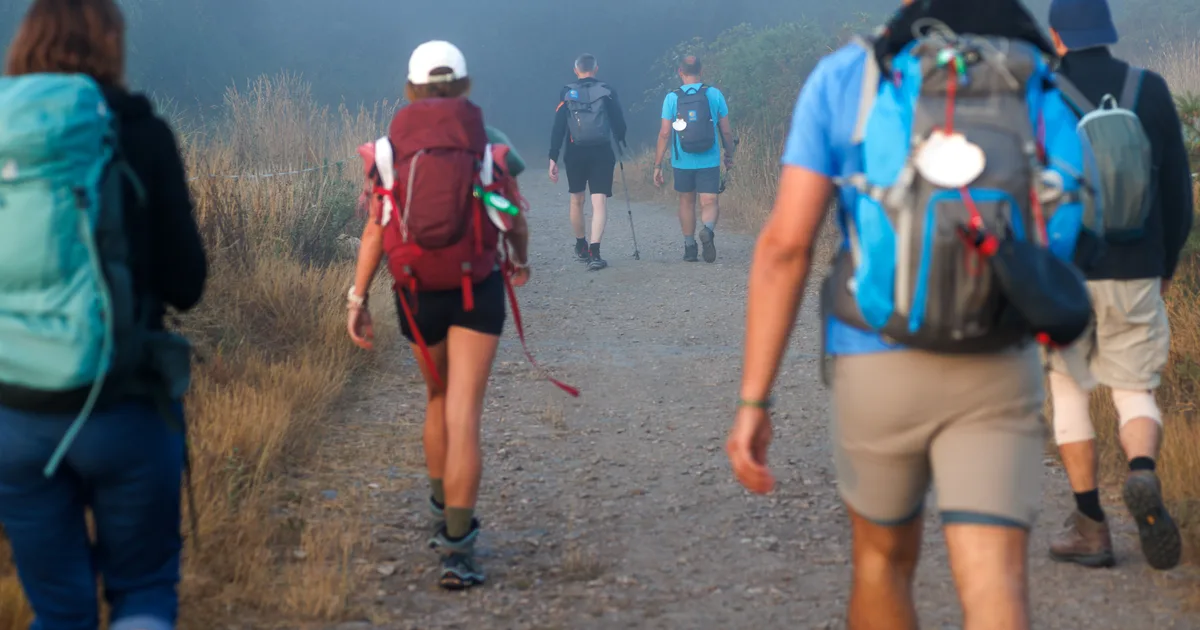
A Spanish study of 1,080 pilgrims suggests that the restorative effect of the Camino depends mainly on the attitude you set off with, the values you attach to it and how safe you feel.
People who have walked the Camino de Santiago tend to come back saying the same thing: it cleared their head. The curious thing is that not everyone comes back equally refreshed, and a Spanish study of more than a thousand pilgrims points to a reason that has little to do with the kilometres: the attitude with which you swing the rucksack onto your back.
1,080 pilgrims and one question
The study is by Mar Durán and Eulogio Real, of the University of Santiago de Compostela, and César San Juan, of the University of the Basque Country, and it has been published in the Revista Iberoamericana de Psicología y Salud, the journal of the Spanish General Council of Psychology. A total of 1,080 pilgrims aged 18 to 75 (just over half of them women) answered an online questionnaire about their attitude towards the Camino, the “restorative” potential they attribute to it, their moral norms and their fear of crime along the way.
“Restorative” comes from environmental psychology, which uses the term for places able to give back the mental energy that daily life drains from us: a forest, the coast, a path between villages. And the Camino does very well: on average, pilgrims scored it 4.31 out of 5.
It is not the rucksack that weighs, it is the attitude
The main finding is that positive attitudes towards the Camino are the best predictor of how much restorative effect you attribute to it. And that relationship runs through two pathways that complement each other and work independently: the values you associate with the route, which the authors call the moral norm, and the feeling that it is a safe path.
Put simply: the Camino recharges you more if you go willingly, if you connect with what it means to you (help between strangers, the “buen camino” every morning, sharing a table with people you met two hours earlier) and if you walk with peace of mind. It makes sense: it is hard to switch off if you treat it as a chore or spend all day worrying about where you will sleep.
Women enjoy it more, but also fear more
Two nuances in the study are worth pausing on. Women perceived more restorative benefit than men, but also more fear of crime. And older pilgrims showed a stronger weight of values and less concern about safety.
The first point is no minor detail: if safety is one of the two pathways through which the Camino works its magic, the fact that many pilgrims feel less safe is a real brake on that benefit. It is a useful reminder for hostels, organisers and authorities, and for you too if you are going alone: planning well is part of mental rest, not just logistics.
Steady on: what this study does not say
Before you start selling the rucksack as if it were medicine, three caveats. The data come from an online questionnaire, so they measure what pilgrims perceive, not a measured effect on their health. It is a snapshot in time, so it shows associations, not causes: perhaps those who enjoy the Camino most are those who already set off with a better attitude. And the sample is mostly Spanish. None of this makes it less interesting; it simply puts it in its place.
Attitude can be trained too
The good news is that attitude is not standard equipment: you build it before you set off. And if what holds you back is getting started, do not blame yourself: your brain prefers the sofa, so make it easy. Here are a few ways to reach day one with your head in the right place:
How to set off with an attitude that recharges
- Be clear about why you are going: to rest, to think, to share or to prove something to yourself. Any reason is valid if it is yours.
- Prepare your body beforehand, so that blisters do not swallow the experience.
- Share your route and stages with someone you trust and choose accommodation with good reviews.
- Leave room for the unexpected: the conversation, the unplanned stop, the detour.
- Train consistency at home: walking a little every day is part of the Camino too.
The Camino you can start today
You do not need to take two weeks off to start experiencing some of this. Victoris’ Camino de Santiago Challenge invites you to clock up 122 km walking, running, cycling or swimming wherever you live, at your own pace, with a medal featuring the pilgrim’s scallop shell waiting at the end. It can be your training for the real thing or your way of living it this year. With a good attitude, of course: you have seen that is what counts most.

You already have your challenge.
All that's left is to start it.
Join this challenge and every workout gets you closer to your medal.
More from the Victoris Diary
 Superación personal
Race nerves are trained weeks ahead, not the night before
A meta-analysis of 24 studies compares what works against competitive anxiety, and when. Spoiler: you train it like intervals, with weeks to spare.
 Superación personal
Being hard on yourself will not make you tougher (kindness will)
A study of British athletes links self-compassion with greater mental toughness, even in the eyes of their coaches. Why talking kindly to yourself after a bad session keeps you going, and how to do it without drifting into "maybe tomorrow".
 Superación personal
Knowing sport is good for you will not make you consistent
A study of 2,677 students identified four motivational profiles and tested which ones sustain the habit. The result stings: understanding that exercise is good for you is not enough, and training under external pressure is not either.