
Exercise snacks: under a minute, several times a day

A meta-analysis of 27 trials and 970 adults puts figures to exercise snacks: bursts of under a minute spread through the day. They improve fitness, blood pressure and cholesterol. The scales, however, do not notice a thing.
"I haven't got time" is the most honest and most repeated answer in the world of exercise. A meta-analysis of 27 trials has just left it in an awkward position: it turns out that one minute, repeated a few times a day, already moves the needle.
What an exercise snack is (and is not)
The literature calls them exercise snacks, and no, we are not especially fond of the name either. The definition, though, is perfectly clear: bursts of under a minute at vigorous intensity — from 77 % of your maximum heart rate, the point at which holding a conversation stops being comfortable — spread across the day.
The important word is "vigorous". This is not standing up for a stretch every couple of hours: it is climbing three flights of stairs at a pace that has you puffing at the top. If you could break into song when you finish, it was not an exercise snack.
What improved across 27 trials
The review pools 970 adults in interventions lasting 8 to 15 weeks, with cycling and stair climbing as the most studied formats, alongside running, brisk walking and bodyweight exercises. The most striking result was maximal oxygen uptake, the best measure of fitness we have, with a moderate-to-large improvement. Systolic and diastolic blood pressure also fell, along with body fat percentage, waist circumference, fasting glucose and total and LDL cholesterol, while HDL went up.
And what did not budge an inch
Body weight. Triglycerides too. Neither difference reached statistical significance, so let us be plain about it: if your only goal is a smaller number in the morning, this is not your tool. If the goal is a heart that works better and friendlier blood pressure, then it is.
Your exercise snack menu
- Three flights of stairs without stopping and without holding the handrail.
- 45 seconds of squats when you get up from your chair, three times a day.
- The last 400 metres home walked very briskly, not strolled.
- 30 seconds stepping up and down a stair while the pasta water boils.
- The hill on your street at a decent pace when you pop out for bread.
How to set it up this week
The protocol from the studies is easy to copy: bursts of under a minute, one to five days a week, and patience for at least eight weeks, which is where the changes start to show. A sensible starting version: three rounds a day, three days a week, in your phone like any other appointment. That is nine minutes of real work per week.
A warning for desk workers: this adds up, but it does not replace getting out of the chair. We already saw that eight hours of sitting are not erased by one gym session, and they are not erased by four stair sprints either. They are different things and you need both.
The small print
The authors put it on the table themselves: twelve of the studies are low quality and eleven moderate, the samples are small and no intervention reached a year. We still do not know whether the effect holds at twelve months or whether it is an initial push and little more. Even so, it has far better backing than most of the wellbeing trends that took off this year, and it is certainly cheaper.
The best part of all this is not the data, it is the door it opens. For years the message was that anything under half an hour was not worth the bother. It turns out it is. And the staircase in your building has been there, free and waiting, since the day you moved in.
Turn those kilometres
into a medal.
Sign up for a Victoris challenge and every training session brings you closer to the medal delivered to your door.
More from the Victoris Diary
 Vida saludable
Carbs on the move: how many grams per hour you really need
A 2026 review raises the ceiling to 120 g of carbs per hour. Before you down four gels, here is what applies to amateurs and how to turn it into bananas, dates or a homemade drink.
 Vida saludable
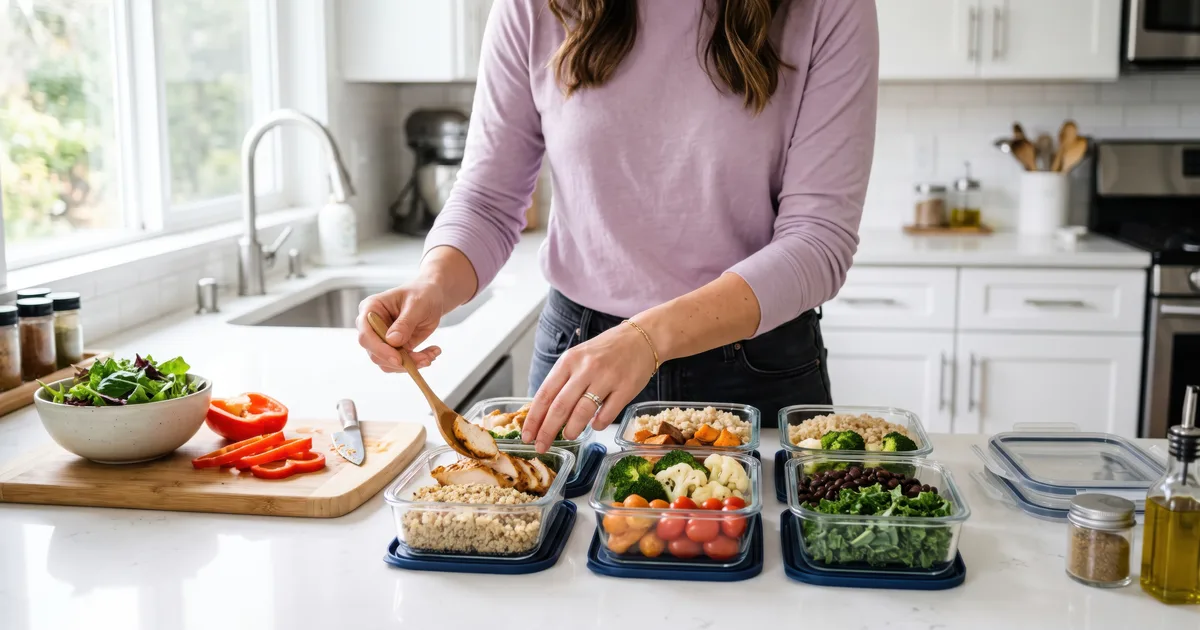
Batch cooking for people who train: the one-afternoon plan
One Sunday afternoon, real quantities and the Harvard storage times so Thursday is not a gamble. A batch cooking plan built for weeks with training in them, with a shopping list and the exact order to cook things in.
 Vida saludable
The WHO 150 minutes are not the target: they are the floor
The WHO estimates that 1.8 billion adults fall short of the minimum for physical activity. We unpack the full recommendation, the one hardly anyone reads, and spread it across a real September week with work, kids and no time.