
Seville Marathon 2027: your 13-week plan, Christmas included
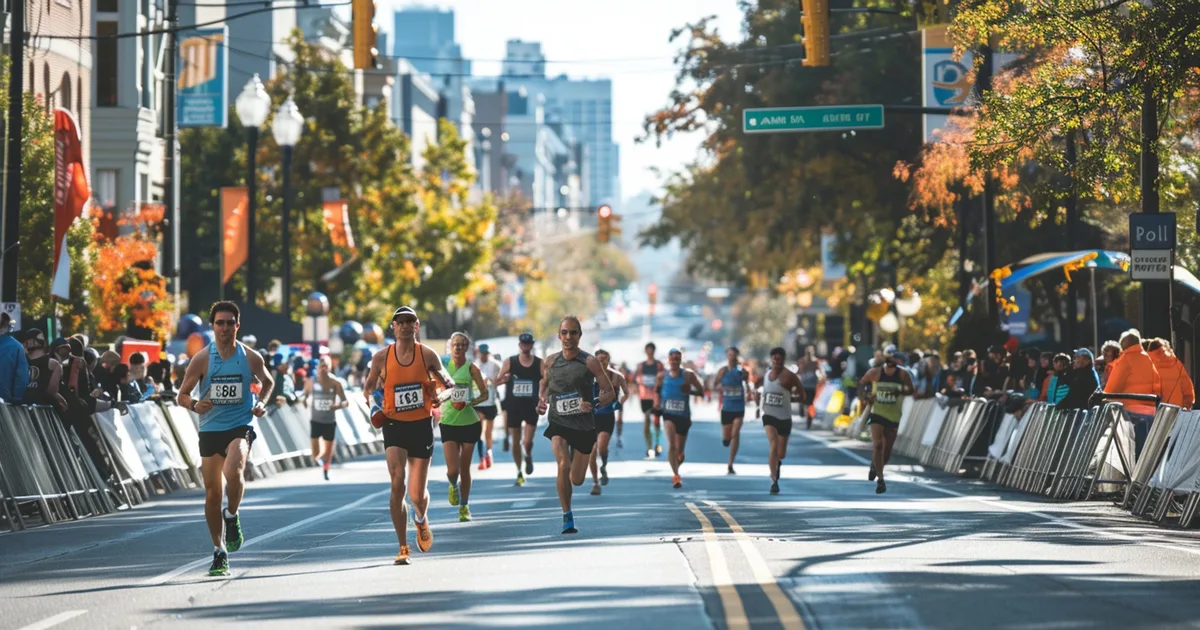
There are 13 weeks to go until the Zurich Seville Marathon, with Christmas right in the middle. Here is a week-by-week plan for anyone who already has a race number (or is on the waiting list), plus all the race-day practicalities.
On Sunday 21 February 2027, at 8:30 am, Avenida de María Luisa will fill with 20,000 people all asking themselves the same question: "whatever possessed me to sign up for this?". If you are one of them, there is good news and so-so news. The good news: from Monday 23 November you have exactly 13 weeks, which is enough if you already have a base. The so-so news: Christmas sits right in the middle. Let us make room for both.
What you need to know before you start
The 2027 Zurich Seville Marathon will be the 42nd edition, and it has already broken a record before anyone has run a step: according to the organisers, all 20,000 race numbers sold out in just ten days in April, 3,000 more than the 17,000 entrants of 2026. If you missed out, there is a waiting list to cover withdrawals. The race rules set a price of €97.10 for those places and close entries on 15 February at 23:59. A place is not guaranteed, so if you are training from the waiting list, bear in mind this plan will leave you just as ready for any other spring marathon.
The organisers boast of having the flattest course in Europe, at sea level and sheltered from the wind, passing the Plaza de España, the Torre del Oro, the Giralda and the Maestranza. At the time of writing, the course page still shows the 2026 route, so it is worth checking again before race day. And a reassuring detail: there is a six-hour limit from the moment the last runner crosses the start, with the finish open until 15:00. Every pace fits.
Is this plan for you?
Let us be honest: thirteen weeks will not turn anyone into a marathon runner from scratch. This plan assumes you currently run about four days a week, cover 35 to 40 km weekly and can manage a 16 to 18 km long run without ending up eyeing passing taxis. If you have already run a half marathon, even better.
If you are a long way from that today, the honest option is to save the marathon for another season and pick an intermediate goal this spring, such as a half: your knees will thank you more than the medal would. And if you have been inactive for a while or have any health concerns, get a medical check-up first.
So that we speak the same language on paces: "easy" means you can chat in full sentences; "marathon pace" is the pace you believe you could hold for the full 42 km. As a rough guide, it tends to be about 15 to 20 seconds per kilometre slower than your half-marathon pace. Bear in mind that this is our own guide, not an official race plan: the marathon website has its own training plans section.
The plan, week by week
That means four running days a week plus one or two short strength sessions, such as the 20-minute, three-exercise routine we suggested before. Volume will build from around 40 km to 55-65 km in the heaviest weeks. If you are not feeling sharp one week, cut back before your body cuts you back: reaching the start line a little short on mileage is far better than not reaching it at all.
Weeks 1 to 4 (23 November to 20 December): building
- Day 1: 45-50 minutes easy.
- Day 2, intervals: 6 × 1 km at 10K pace with 2 minutes of jogging between them. In weeks 3 and 4, switch to 4 × 2 km at half-marathon pace with 2 minutes of jogging.
- Day 3: 50 minutes easy. In weeks 3 and 4, include 20 continuous minutes at marathon pace in the middle.
- Day 4, long run: 18, 20, 22 and 24 km, all easy.
Week 5 (21 to 27 December): Christmas recovery week
- Cut volume by roughly a third: three easy runs and a 16 km long run.
- No intervals. If Christmas Eve dinner runs late, move the long run to the 26th or 27th and all is forgiven.
- This week is not wasted time: it is when your body absorbs the work of the previous four.
Weeks 6 to 9 (28 December to 24 January): volume
- Day 1: 50-60 minutes easy.
- Day 2, intervals: 3 × 3 km at half-marathon pace with 3 minutes of jogging (weeks 6 and 8) and 8 × 1 km at 10K pace with 90 seconds of jogging (weeks 7 and 9).
- Day 3: after warming up, a block at marathon pace of 6, 8, 10 and 10 km, then cool down.
- Day 4, long run: 24, 26, 28 and 30 km easy. In the 28 km run, do the last 6 km at marathon pace.
- New Year's Eve falls in week 6: do the long run on 2 or 3 January, not at nine o'clock on the 1st. And if your local New Year's Eve race tempts you, run it as an easy run in fancy dress, not as a race.
Week 10 (25 to 31 January): second recovery week
- Cut volume by a quarter and keep the long run to 18-20 km.
- If you want to know where you stand, a half marathon or a 15 km test at half-marathon pace will give you a realistic reference for setting your race pace.
Week 11 (1 to 7 February): the last big long run
- Day 2: 6 × 1 km at 10K pace with 2 minutes of jogging.
- Day 3: 50 minutes easy.
- Day 4: 30-32 km, with 10-12 km at marathon pace in the second half. This is the dress rehearsal: same kit, same shoes, same breakfast and same way of fuelling on the move as on race day.
- Many coaches cap long runs at around three hours. If 30 km takes you longer than that at your pace, stop at three hours.
Week 12 (8 to 14 February): ease off
- Reduce volume by 30 to 40%, but keep some pace work: on day 2, 2 × 4 km at marathon pace.
- An easy 18-20 km long run at the weekend.
- You will notice restless legs and an urge to do more. That is a good sign: save it.
Week 13 (15 to 21 February): race week
- Monday: rest. Tuesday: 40 minutes including 3 km at marathon pace. Wednesday: 30-35 minutes easy. Thursday: rest or 20 minutes very easy.
- Friday or Saturday: collect your race number at the Runners' Expo at FIBES, open from 10:00 to 20:00 on 19 and 20 February. The rules are clear: no race numbers are handed out on race day.
- Saturday: 15-20 minutes of jogging with four short strides and a familiar dinner. No Sevillian culinary experiments until Sunday afternoon.
- Sunday: the start is at 8:30. Eat your usual breakfast about three hours before and set off slower than your body is asking for. Kilometre 35 will thank you.
When the plan goes off track (and it will)
Thirteen weeks in the middle of winter leave room for the odd cold. Before you run again, have a look at our guide on when and how to return to training after a cold. A practical rule: if you miss a few days, pick the plan up where you left off without trying to make up the lost sessions. If you miss more than a week, repeat the previous week before moving on and take an honest look at your target time. What never works is cramming two long runs into the same week to compensate.
With work Christmas dinners, the trick is the calendar: if a long run is due the next day, move it to the day before or swap it for a short run. Cava and 28 km rarely get along. And there is no need to diet among the Christmas sweets: what you need is to keep training, which is exactly what this plan asks of you.
What the table does not show
Your stomach needs training too. Practise in your long runs with the gels, drinks or whatever you plan to take during the race. In September the organisers themselves launched an official gummy with 46 grams of carbohydrate: if you intend to use it, try it before February. What we told you about how many carbohydrates per hour make sense, written with cycling in mind, is a useful starting point.
Do not wear anything new on race day either, not even socks. If you are thinking of racing in carbon-plated shoes, do at least a couple of long runs in them first. For the mental side, remember that race nerves are trained weeks in advance, and for the final week there is our night-by-night sleep plan.
By the way, between November and February you will clock up well over 500 km. If watching the counter grow motivates you, in the Victoris Hermes Challenge the 300 km are completed run by run, and even the recovery-week runs count. And on 21 February, as you cross the finish line, remember this article from November. We will be thinking of you.
Turn those kilometres
into a medal.
Sign up for a Victoris challenge and every training session brings you closer to the medal delivered to your door.
More from the Victoris Diary
 Competiciones
Quebrantahuesos 2027: about 32 weeks to get your legs ready
The Quebrantahuesos now has a date: 19 June 2027, in Sabiñánigo. We look at what is confirmed, what is still unknown and a phased plan starting in November, with the Treparriscos as an alternative if 200 km is too much.
 Competiciones
San Silvestre Vallecana 2026: a 10-week plan for your 10K
There are ten weeks left until New Year's Eve, exactly what you need. Here is a plan to reach the 10 km of Madrid's San Silvestre Vallecana enjoying it (or knocking time off your PB), plus everything practical for race day.
 Competiciones
Behobia 2026: fourteen weeks to reach the Boulevard
The 61st Behobia-San Sebastián is run on Sunday 8 November. Fourteen weeks to go — not many, not few: exactly enough. Here is the plan, block by block, with the climbs, the descents and the taper in their proper place.