
Quebrantahuesos 2027: about 32 weeks to get your legs ready
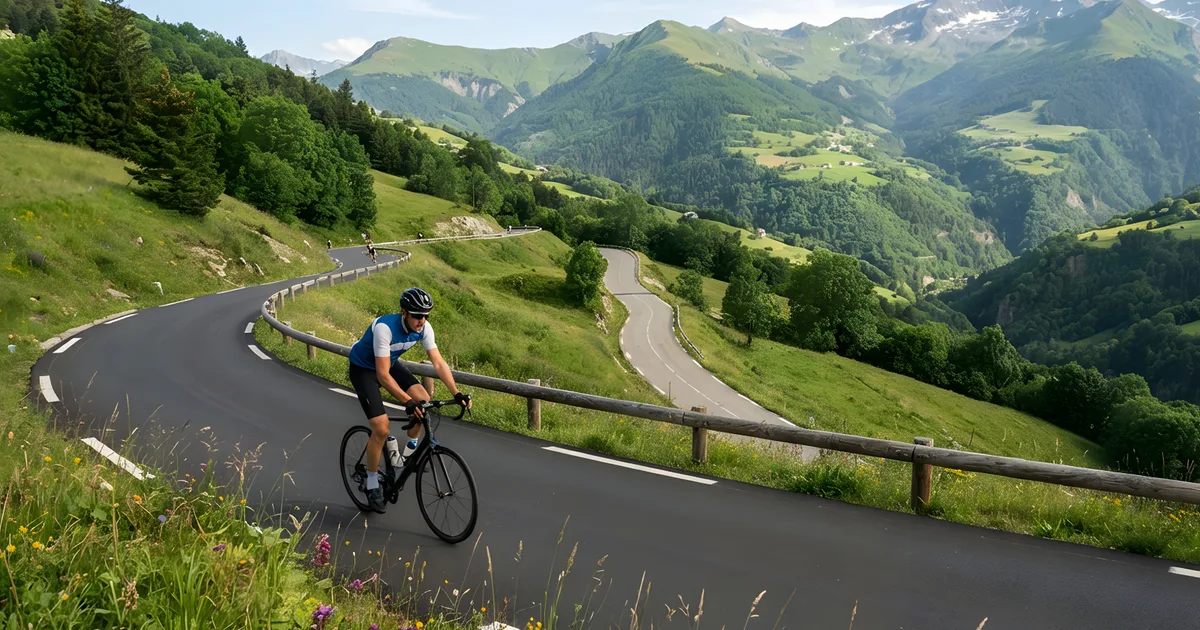
The Quebrantahuesos now has a date: 19 June 2027, in Sabiñánigo. We look at what is confirmed, what is still unknown and a phased plan starting in November, with the Treparriscos as an alternative if 200 km is too much.
On 19 June 2027, Sabiñánigo will once again fill up with cyclists casting nervous glances at the Portalet profile. The organisers confirmed the date on 14 October and, although June sounds a very long way off from the sofa in November, you have about 32 weeks left. That is plenty of time if you start now. If you start in April, we will need to have a word.
What is confirmed and what is not
The official announcement confirms three things: this is the 36th edition, it takes place on Saturday 19 June 2027 and Sabiñánigo is the meeting point. As we write this, in early November, the announcement gives no entry deadlines, number of places or ballot details for 2027, and we have not found them published elsewhere. Everything else you read here comes from previous editions: it is a useful guide, but it may change.
In 2026, the Gran Fondo was 200 km, with a latest finish time of 19:30, and the Treparriscos was 85 km, with a latest finish time of 15:15. The 2025 edition took in Somport, Marie Blanque, Portalet and Hoz de Jaca, with about 3,500 metres of climbing.
As for entry, 2026 had pre-registration and a ballot, and the draw for the 2025 edition took place on 14 January, with 8,000 places and more than 10,500 applicants. Keep an eye on the official website this winter, but train without taking a place for granted: if your number does not come up, you still keep the legs.
Gran Fondo or Treparriscos?
Be honest with yourself: 200 km across the Pyrenees means many hours in the saddle, and the Treparriscos is no consolation prize. If three hours on the bike currently leave you wrecked, or you can only train on the odd day, 85 km ridden well will bring more joy than 200 km endured. The criteria for choosing a sportive based on what you have ridden that we shared in the autumn work just as well for this decision.
The plan, phase by phase
This is our own rough guide, not an official plan for the event. It assumes that you already ride for about three or four hours a week and are in good health. If you have been inactive for a while or have any health concerns, get a medical check-up first. Ease off for one week in every three or four so that the work can sink in.
November to June, for the Gran Fondo
- Base (9 November to 3 January): 4-6 hours a week, nearly all easy, with one long ride of 2-2.5 hours and two short strength sessions. The turbo trainer is fine when the weather is against you.
- Volume (4 January to 28 February): 6-8 hours, with a long ride of 3-4 hours and one session at a sustained pace, such as 2 blocks of 10-15 minutes.
- Climbs (1 March to 2 May): 8-10 hours, with a long ride of 4-5 hours and 1,500-2,000 metres of climbing, plus 3 climbs of 15-20 minutes at sportive pace.
- Specific (3 May to 6 June): 10-12 hours in the big weeks, with two or three rides of 5-6.5 hours and 2,500-3,000 metres of climbing.
- Taper (7 to 19 June): cut the volume by almost half, keep in some short efforts and arrive keen to ride.
For the Treparriscos, the structure is the same with about two-thirds of the volume and long rides reaching 3-4 hours in May. And if heading out at zero degrees with nothing in sight is a struggle in January, put a scoreboard on your kilometres: in Victoris's Hermes Challenge, the 300 km add up ride by ride, and the ones you do on the bike count too.
What the training hours do not show
An event like this is not decided by watts alone. Use your long rides to practise everything you will do on the day, starting with eating and drinking regularly, without waiting until you are hungry. Your stomach needs training as well, and May is a bad time to discover that a particular bar disagrees with you.
Check your gearing before March: on a long climb, one extra sprocket beats your pride. Practise the descents as well, because there is a lot of downhill and mountain weather changes quickly, so always carry a warm layer. And remember that the Portalet arrives with many hours already in your legs, so some of your long rides should finish uphill. It is a cruel idea, but it works.

You already have your challenge.
All that's left is to start it.
Join this challenge and every workout gets you closer to your medal.
More from the Victoris Diary
 Competiciones
San Silvestre Vallecana 2026: a 10-week plan for your 10K
There are ten weeks left until New Year's Eve, exactly what you need. Here is a plan to reach the 10 km of Madrid's San Silvestre Vallecana enjoying it (or knocking time off your PB), plus everything practical for race day.
 Competiciones
Behobia 2026: fourteen weeks to reach the Boulevard
The 61st Behobia-San Sebastián is run on Sunday 8 November. Fourteen weeks to go — not many, not few: exactly enough. Here is the plan, block by block, with the climbs, the descents and the taper in their proper place.
 Vida saludable
Back from a cold: when and how to start training again
A study of 114 confirmed respiratory infections in athletes puts dates on the comeback: a few days to train again, a week for full training and almost two to get back to your best. Here is how to do it step by step.