
Walk your way to better sleep: your 25-week plan, step by step
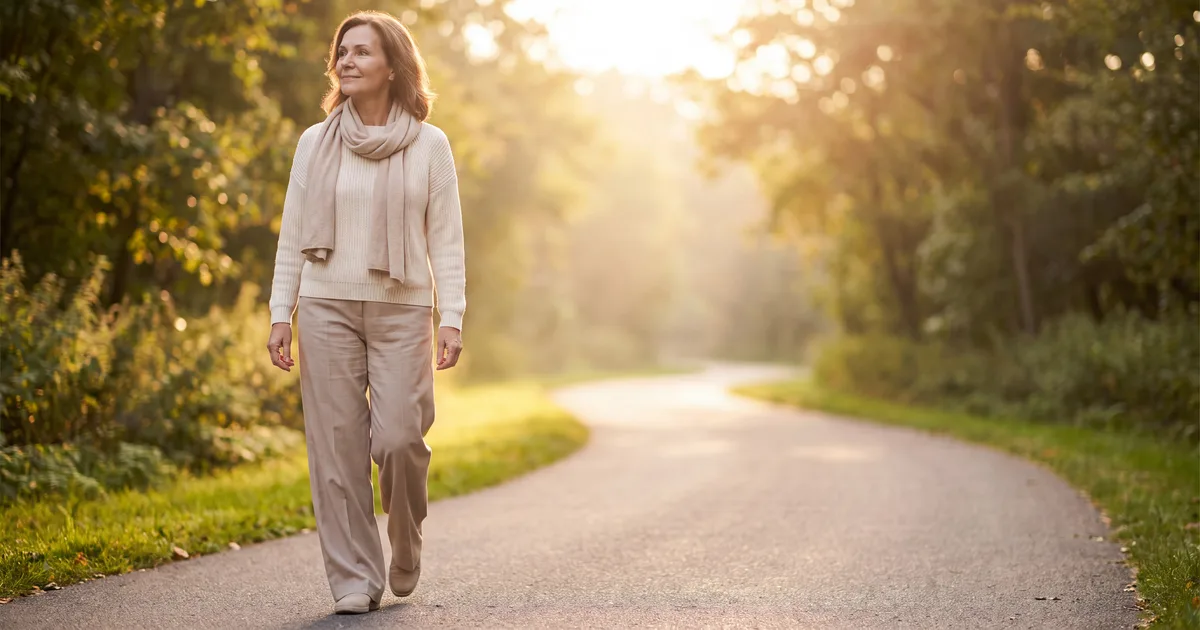
A meta-analysis of 200 trials places walking among the exercises that most improve sleep, especially if you sleep badly now. Here is a phased plan, with honesty about what science does not yet know.
If you spend your nights counting sheep (plus the odd stray goat), we have a suggestion that is not very glamorous but is backed by evidence: walking. A meta-analysis of 200 trials and more than 23,500 adults, published in Sleep Medicine Reviews, concludes that exercise improves sleep quality, and walking is among the options that come out best. Here is what it says, plus a plan to put it into practice.
What the science says (and what it does not yet)
The authors pooled 200 randomised trials in adults comparing exercise with no exercise, published up to August 2025. Against control groups that also did some activity, the biggest improvements came from qigong, walking and high-intensity interval training. In the 20 trials that measured sleep with devices, not just questionnaires, exercise slightly improved sleep efficiency, that is, the share of your time in bed that you actually spend asleep.
Two details matter especially if you sleep badly. First, those who slept worst at the start were much more likely to notice a real improvement; the authors describe it as an «on-demand» benefit. Second, the effect grew with the length of the programme, peaking at around 25 weeks. That is why they suggest programmes of about 25 weeks for adults with moderate to severe sleep problems.
Now the honest bit: the researchers themselves rate the certainty of the evidence as very low. The studies differ a lot and many measure sleep with questionnaires. In other words, the direction is promising, but nobody can promise you will sleep like a log. The good news is that walking has few side effects and plenty of benefits beyond sleep.
The plan: 25 weeks in four phases
It is designed for someone who sleeps badly and is starting from a low level of activity. If you already move, start at the phase that suits you. The intensity guide is the talk test: you can hold a conversation, but you could not sing a whole song.
Phase 1 · Weeks 1 to 4: build the habit
- 3 days a week, 20-25 minutes walking at a comfortable pace.
- Always pick the same time of day: the routine helps as much as the steps.
- Every morning, rate your sleep from 1 to 5. That is all.
Phase 2 · Weeks 5 to 12: pick up the pace
- 4 days a week, 30 minutes at a brisk pace (you can talk, but not sing).
- If you fancy it, include a route with a hill on one of the days.
- Keep rating your sleep from 1 to 5 and look at each week’s average.
Phase 3 · Weeks 13 to 20: add variety
- 4 or 5 days a week, 30-40 minutes.
- Optional: one day of walking intervals, for example 6 rounds of 1 minute very fast or uphill plus 2 minutes easy.
- Do the intervals during the day or in the afternoon, not right before bed.
Phase 4 · Weeks 21 to 25: consolidate and review
- Keep the volume that suits you; there is no need to keep increasing it.
- Compare your sleep ratings with those from the first month.
- Decide how to carry on: ideally, walking is now part of your week without a second thought.
Tips to make your walk work for you
If you can, go out in daylight, in the morning or mid-afternoon: besides clearing your head, it helps you separate day from night. If you have a busy week, cut minutes rather than days; keeping the habit matters more than the number.
And if you are in the habit of having coffee before training, think about the time when your session is in the afternoon: caffeine is not the best bedfellow.
There will be weeks when you do not get out. That is fine: being hard on yourself does not make you more consistent, and picking it up again on Monday without fuss beats beating yourself up on Sunday.
When to see a professional
- If after several weeks on the plan you are still sleeping just as badly.
- If you snore very loudly, wake up gasping or feel very sleepy during the day.
- If your insomnia comes with low mood, anxiety or worries that will not go away.
Turn those kilometres
into a medal.
Sign up for a Victoris challenge and every training session brings you closer to the medal delivered to your door.
More from the Victoris Diary
 Vida saludable
The exercise you choose protects your brain (work, not so much)
A meta-analysis of more than 4 million people links leisure-time exercise to a 24% lower risk of dementia, but not physical activity at work. Here is why chosen movement makes the difference.
 Vida saludable
A sleep plan for your race week, night by night
A review of sleep and performance in ultra-endurance athletes points to two strategies: sleeping more in the days before and taking short naps. We have turned them into a plan for your race week.
 Vida saludable
Clocks going back: you don’t move less, you move at another time
On 25 October the clocks go back. A study using fitness tracker data shows we don’t lose activity: we shift it. Here is what that means for your evening training.