
Clocks going back: you don’t move less, you move at another time
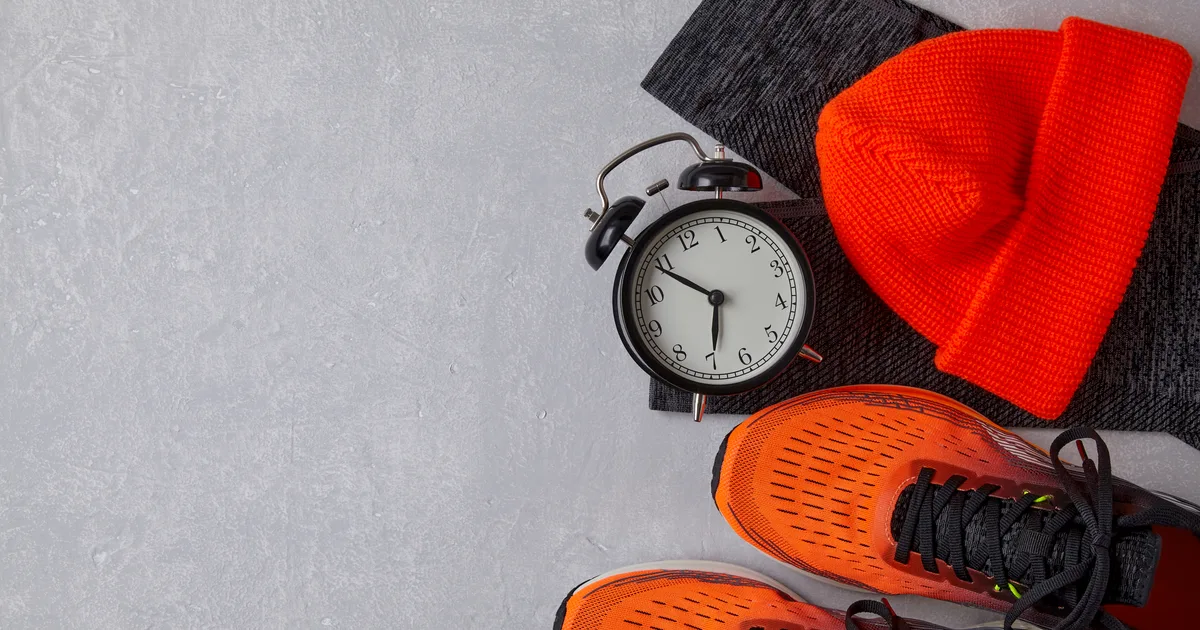
On 25 October the clocks go back. A study using fitness tracker data shows we don’t lose activity: we shift it. Here is what that means for your evening training.
In the early hours of Sunday 25 October, 3 am will become 2 am again in Spain. We will gain an hour of sleep that night, lose an hour of evening light for the rest of the autumn and, as every year, someone in your group chat will declare that “this clock-changing business is killing us”. A recent study using data from activity trackers gives a less dramatic and far more interesting answer.
Over a thousand trackers and a state that never changes its clocks
The work, published in Nature Health by researchers at Duke University, analysed Fitbit data from 1,157 participants in the US National Institutes of Health’s All of Us programme around the clock changes from 2021 to 2023. The clever part is the design: Arizona does not change its clocks, while its neighbours Colorado, New Mexico and Utah do. They share almost the same daylight, weather and seasons, so comparing one with the others isolates the effect of the clock from everything else.
And the result debunks a cliché: the clock change did not alter the total number of daily steps. What it did was move them around.
In autumn, mornings win and evenings lose
After the autumn change, when it gets light earlier, participants took on average 202 more steps in the morning and 180 fewer in the evening. In spring, exactly the opposite happened. Two hundred steps is hardly an epic (the authors compare it to about a block and a half of city streets), but the pattern is clear: the body follows the light, and when the light moves to another part of the day, activity follows it.
Physically, resting heart rate showed small shifts across the day that tracked those changes in behaviour, with no clinical significance. In other words: your heart does not suffer from the clock change; it simply notices that you have rearranged your diary.
Not everyone can rearrange their day
Here comes the juiciest part. The ability to shift activity was not the same for everyone. People over 65 clearly made use of the morning light in autumn (around 280 extra steps early in the day), whereas younger adults showed no significant change. The authors point to factors such as rigid working hours or perceived safety: if you start work at eight, that extra light on November mornings does not do you much good.
What is more, evenings lost steps across every income level. So for anyone who trains after work, the autumn change has a very concrete effect: the seven o’clock run is suddenly in the dark, and if you do nothing, it will most likely just drop out of your calendar.
How to reorganise your evening training
The study’s message is liberating: your activity does not have to drop, it just needs a new home. Some realistic options, depending on what your week looks like:
A plan B for darker evenings
- Switch to early mornings two days a week, even if the sessions are shorter. Lay your kit out the night before: willpower at 7 am is in short supply.
- Use your lunch break if your job allows it: half an hour of easy running or strength work fits between a meeting and your packed lunch.
- If you stick with evenings, choose well-lit, busy routes and make yourself visible: head torch and reflective clothing.
- Save the long run for the weekend, when daylight is not an issue.
- Count the whole week, not the day: if Tuesday falls through, Wednesday morning can fill the gap.
If you move your run to first thing, remember that setting off at 7 am, just out of bed and in the November chill, is not the same as heading out mid-afternoon. Spending a few minutes on a warm-up such as the RAMP method makes that first early session a lot kinder.
And what about sleep?
The autumn change is usually the easier one: Sunday night gifts you an extra hour. The real debate lies elsewhere. The Spanish Sleep Society has for years been arguing for an end to changing the clocks and for keeping winter time all year round, because it provides more morning light, which is what helps set the body clock. While governments make up their minds, what you can do is get some morning light and keep your wake-up time steady that week, even if Sunday begs you to stay in bed.
And if you are worried about losing consistency as the days shorten, hold on to the moral of the trackers: steps do not disappear, they move house. Your job this autumn is not to move more or less, but to find them a new home before the clock decides for you.
Turn those kilometres
into a medal.
Sign up for a Victoris challenge and every training session brings you closer to the medal delivered to your door.
More from the Victoris Diary
 Vida saludable
Four portions of pulses a week (without getting bored)
Spain’s food safety agency recommends at least four portions of pulses a week. Three autumn recipes with quantities, tips against wind and how to fit them around training.
 Vida saludable
The tiredness sleep does not fix: let us talk about iron
Iron deficiency is far more common in women who train, and it is almost never checked. The difference between low ferritin and anaemia, and when a blood test makes sense.
 Vida saludable
Carbs on the move: how many grams per hour you really need
A 2026 review raises the ceiling to 120 g of carbs per hour. Before you down four gels, here is what applies to amateurs and how to turn it into bananas, dates or a homemade drink.