
A sleep plan for your race week, night by night
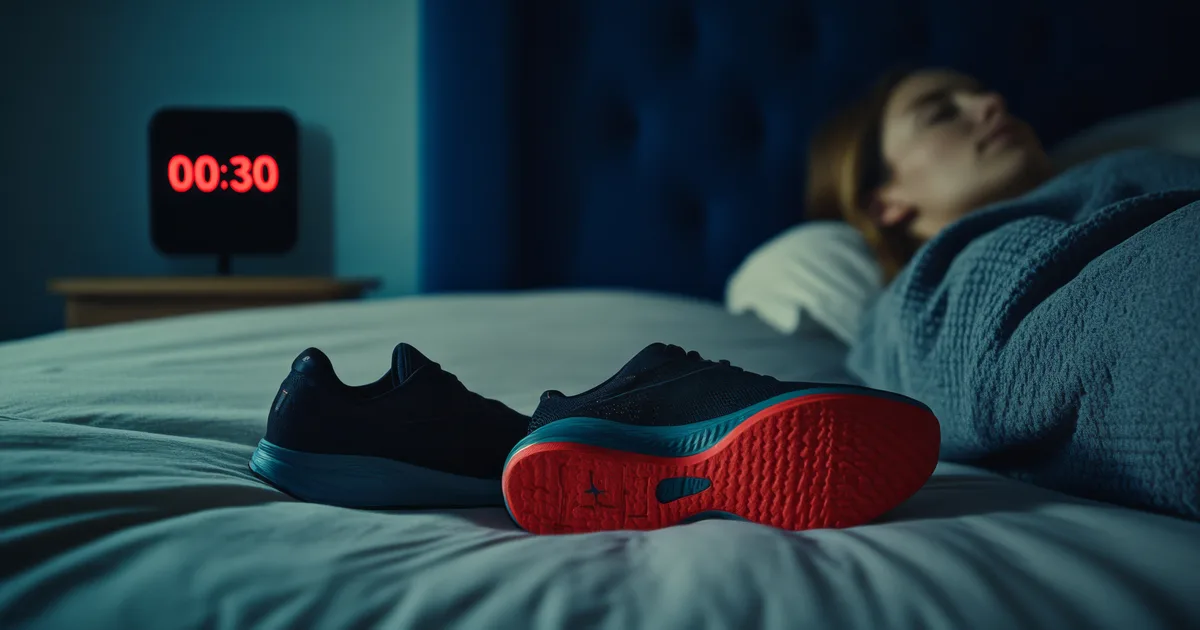
A review of sleep and performance in ultra-endurance athletes points to two strategies: sleeping more in the days before and taking short naps. We have turned them into a plan for your race week.
You have been training for weeks, you have your race number, your shoes are tested and your fuelling is rehearsed. And your sleep? It is usually the last thing to be planned and the first thing nerves ruin. A scientific review of ultra-endurance athletes sets out some very specific strategies, and we have used them to build a plan for your race week, whether it is the Behobia, an autumn marathon or that sportive that is keeping you up at night (literally).
What the science says (and about whom)
The review, published in the Journal of Clinical Medicine, analysed 16 studies with data from 1,389 ultra-endurance athletes: ultramarathon runners, cyclists, triathletes and cross-country skiers. Physically, better performance was associated with having slept more the night before the event. Cognitively, meaning attention and reaction time, it was associated with good sleep quality before competing and with naps during the race.
The authors themselves urge caution: the relationship between sleep and performance does not seem to be linear, it depends on the context of each event and the studies have their limitations. And we should be honest about something else: hardly anyone reading this is about to run 168 kilometres starting from Chamonix. But the underlying idea, reaching the start line without a sleep debt, works just as well for a 10K as for a marathon.
The key: arrive in credit
The strategy that comes up most often is sleep extension: sleeping more than usual in the days beforehand so you arrive with something in reserve. The review presents it as a viable way to reduce sleep debt and reports benefits for physical performance. It also picks up an important warning from earlier research: when you build up a lack of sleep, mental performance does not fully recover even after more than a week of extra sleep, and the classic “I’ll catch up at the weekend” falls short.
That is why this plan does not start the night before, but a week earlier. After all, sleeping well is the invisible training that pays off most, and in race week even more so.
Days −7 to −4: fix your alarm and bring bedtime forward
Choose a wake-up time and stick to it every day, weekends included. From there, bring your bedtime forward by 30 to 60 minutes compared with usual. That figure does not come from the review: it is our practical way of applying sleep extension without fighting your diary. It helps that your training is already tapering this week: less load and a bit more time.
Days −3 and −2: protect your reserve
These are the nights when the week is most likely to go off the rails: dinner with friends, travelling to the race city, collecting your race number. Try to keep them as close as possible to the previous ones. If you are sleeping away from home, take what helps you at home: earplugs, an eye mask and, if it fits in the suitcase, your pillow.
Day −1: the night before, no drama
Get everything ready in the afternoon: number pinned on, kit chosen, breakfast planned and a double alarm set. What you no longer have to remember will not keep you awake. Eat dinner early and stick to something familiar. And accept in advance that you might sleep worse, because nerves do that to a lot of people: that is exactly why you have been building up reserves on the previous nights.
If you cannot get to sleep, do not check the clock every ten minutes or start counting how many hours you have left. Get up, read something calm in dim light and go back to bed when you feel sleepy. And if the night turns out patchy, do not beat yourself up: being hard on yourself does not make you stronger, and you arrive with a whole week of rest behind you.
The nap: your wild card
In the study of the 168 km race, a nap of 15 to 20 minutes at an aid station improved runners’ reaction times. And another earlier review, cited in the paper, identified napping as the sleep intervention with the greatest effect on cognitive performance. For your race week, a short nap after lunch can make up for a night that was shorter than it should have been, as long as it does not steal your sleep the following night.
If your event lasts many hours
In events lasting many hours or several days, things change. In several of the studies reviewed, those who slept less during the competition finished sooner, while greater sleepiness during the race was associated with slower times. It is a delicate balance, best left to specialists: if you are taking on something like that, sleep during the event deserves its own plan.
Day +1: sleep is recovery too
You have crossed the line, you have celebrated and even your eyelashes ache. The review recommends monitoring how much and how well you sleep in the recovery period too, so on the night after, get to bed early. You have earned it.
Race week checklist
- Same wake-up time from seven days before, weekend included.
- From day −7 to −2, go to bed 30 to 60 minutes earlier than usual.
- For the last hour of the day, keep screens out of bed.
- Coffee is best in the morning.
- Everything ready the afternoon before: number, kit, breakfast and double alarm.
- If you cannot sleep the night before, get up and go back when you feel sleepy, without checking the clock.
- A short nap of 15 to 20 minutes if the night was short, and not too late in the day.
- On the night after the race, early to bed: that is training too.
Turn those kilometres
into a medal.
Sign up for a Victoris challenge and every training session brings you closer to the medal delivered to your door.
More from the Victoris Diary
 Vida saludable
Clocks going back: you don’t move less, you move at another time
On 25 October the clocks go back. A study using fitness tracker data shows we don’t lose activity: we shift it. Here is what that means for your evening training.
 Vida saludable
Four portions of pulses a week (without getting bored)
Spain’s food safety agency recommends at least four portions of pulses a week. Three autumn recipes with quantities, tips against wind and how to fit them around training.
 Vida saludable
The tiredness sleep does not fix: let us talk about iron
Iron deficiency is far more common in women who train, and it is almost never checked. The difference between low ferritin and anaemia, and when a blood test makes sense.