
Menopause: eating to keep your bone and your muscle
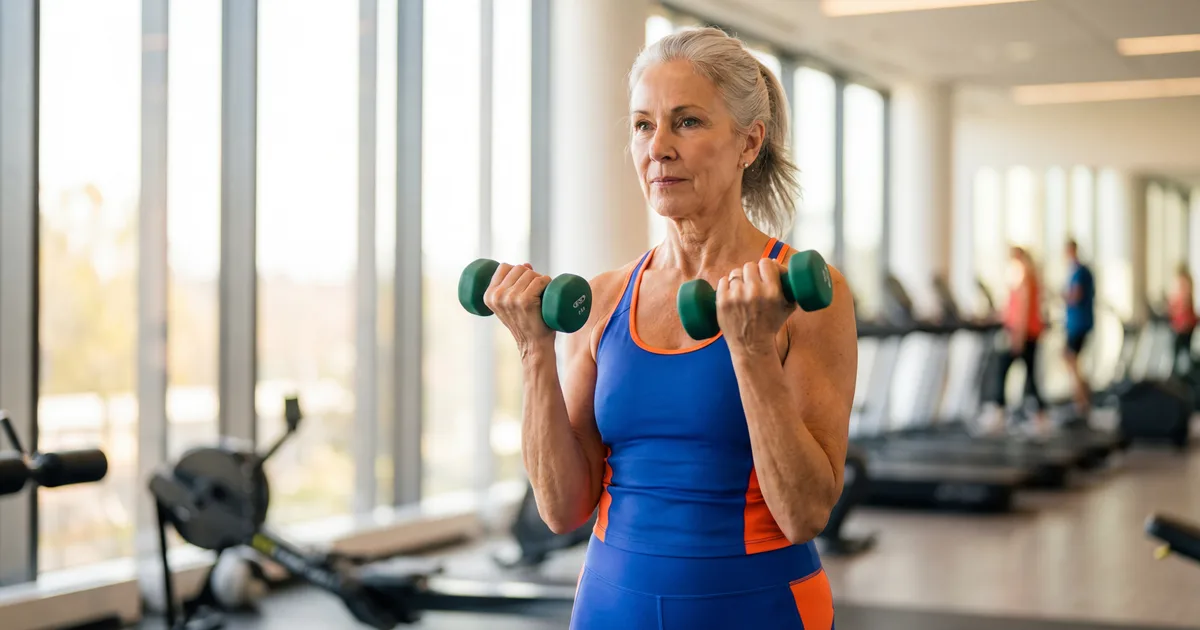
The Scientific Committee of Spain’s food safety agency has set out what to watch on your plate during menopause. We turn it into a week of meals and two strength sessions, small print included, because there is some and it is juicy.
There is a stage of life that sports blogs barely mention, and in which the body changes the rules halfway through the match: menopause. In March 2026, the Scientific Committee of Spain's Food Safety and Nutrition Agency (AESAN) published a report on what to eat during those years. It is a sensible, useful document, and it comes with a story worth telling in full.
What changes, put bluntly
Falling oestrogen is not only a matter of hot flushes. The report lists what is at stake: loss of bone mass and osteoporosis, sarcopenia (the progressive loss of muscle mass and function), more visceral fat, cardiovascular changes, cognitive decline, and a higher risk of diabetes and of some cancers.
Read in one go, it is a little frightening. Read calmly, it is a list of things you can act on, and nearly all of them answer to the same two levers: what goes on your plate and what you do with your muscle. That is the rest of this article.
The nutrients the report points to
AESAN's short list
- Protein, animal and plant, to slow sarcopenia.
- Calcium and vitamin D, for bone. Calcium is not only in dairy: pulses and tinned sardines with the bones count too.
- Omega-3, for its anti-inflammatory role: oily fish, olive oil, nuts and flaxseed.
- Fibre, which improves glucose control and helps with visceral fat.
- Magnesium, involved in protein formation, bone maintenance and glucose regulation.
- Vitamins B6, B9, B12 and E, for the cardiovascular and cognitive side and for oxidative stress.
- Overall pattern: a Mediterranean diet. And no tobacco or alcohol.
No surprises there, which is a good sign: when a public body agrees with the same old boring advice, it usually means the same old boring advice works. Protein is the lead role here, and if you want the actual number and where it comes from, we worked through how much protein you really need if you train a while back.
A sample week, without weighing every gram
This is not a diet and it does not replace your doctor: it is a template so you can see how those nutrients fall into place across seven ordinary days, the kind you shop for at the supermarket downstairs.
Indicative seven-day menu
- Breakfasts: plain yoghurt with walnuts and fruit, or wholemeal bread with olive oil and fresh cheese. Protein and calcium from the first hour.
- Monday: lentils with vegetables / baked hake with potato and peppers.
- Tuesday: chickpea salad with tuna and tomato / courgette omelette and a piece of fruit.
- Wednesday: vegetable soup and grilled chicken / grilled sardines with salad.
- Thursday: brown rice with vegetables and egg / mushroom scramble with wholemeal bread.
- Friday: beans with vegetables / baked salmon with asparagus.
- Saturday: chickpea stew with spinach / potato omelette and salad, no drama.
- Sunday: vegetable and chicken paella / pumpkin soup and fresh cheese with walnuts.
- Between meals: fruit, a handful of nuts, a yoghurt. No miracle bars.
Look closely and you will find oily fish three times a week, pulses four, protein at both main meals and nuts on most days. There is no magic food, and that is exactly the report's message: the whole Mediterranean pattern, not one lone superfood.
The part you cannot eat: 150 minutes and two strength days
The report does not stop at the plate. It recommends 150 to 300 minutes a week of moderate aerobic activity, or 75 to 150 of vigorous activity, plus two strength sessions a week. Those two sessions are not an optional extra: against the loss of bone and muscle, food alone does not get there. You need to give the skeleton a reason to hold on.
Two days a week, six or eight basic exercises, two or three sets of eight to twelve repetitions, adding weight little by little. A squat, a push, a pull, a hip hinge and something for the core. You need no more than that to start, and you need no gym: a pair of dumbbells and a mat go a long way.
And now the small print, which is the best part
In August 2026 it emerged that the report itself had a problem. In the recommended intakes section, some values (iron and vitamin C, specifically) came from studies carried out exclusively on men, and others referred to the general population rather than to the women the document is about. With no warning that this was the case.
It was spotted by Sonia de Pascual-Teresa Fernandez, a researcher at Spain's National Research Council and a member of the Association of Women Researchers and Technologists. The most revealing detail: the original European source did warn that, in the absence of studies in women, it was extrapolating from male data adjusted for body weight. That warning was lost along the way. AESAN has acknowledged the omission, will add a clarifying note and has asked its scientific committee to review the document.
That is why you will find no iron or vitamin C figures here: we are waiting for the revision. And that is why we are telling you rather than glossing over it, because it explains better than any speech why women get worse sports and nutrition advice. It is not bad faith. It is that for decades the studies were done on men and everyone assumed the results applied to everybody.
Adequate nutrition during menopause can help prevent bone mass loss, sarcopenia and the cardiovascular changes associated with this stage.
Report of the AESAN Scientific Committee, March 2026
What to take away
Protein at every meal, calcium and vitamin D kept in view, oily fish and nuts as a rule, and two weights days written in the diary in the same ink as the cardio. As for the finer figures, be patient: even public bodies have to correct themselves now and then, and thank goodness they do.
Turn those kilometres
into a medal.
Sign up for a Victoris challenge and every training session brings you closer to the medal delivered to your door.
More from the Victoris Diary
 Vida saludable
Creatine after 45: what the study says (and what it does not)
A Texas A&M study in people aged 45 to 65 suggests creatine helps build muscle and strength even without training. We go through the results, the small print and what to check before buying a tub.
 Vida saludable
Walk your way to better sleep: your 25-week plan, step by step
A meta-analysis of 200 trials places walking among the exercises that most improve sleep, especially if you sleep badly now. Here is a phased plan, with honesty about what science does not yet know.
 Vida saludable
The exercise you choose protects your brain (work, not so much)
A meta-analysis of more than 4 million people links leisure-time exercise to a 24% lower risk of dementia, but not physical activity at work. Here is why chosen movement makes the difference.