
The WHO 150 minutes are not the target: they are the floor

The WHO estimates that 1.8 billion adults fall short of the minimum for physical activity. We unpack the full recommendation, the one hardly anyone reads, and spread it across a real September week with work, kids and no time.
The WHO 150 minutes a week get quoted so often that they have come to sound like an ambitious target. They are not: they are the starting point at which the benefits begin to count, and the full recommendation has three more parts that almost nobody gets around to reading. Let us read them together and spread them across a real week, the kind with work in it.
The size of the gap
The WHO physical activity fact sheet, updated on 26 June 2024, puts numbers to something we suspected: 31% of adults worldwide fall short of the recommended levels. That is close to 1.8 billion people. Among adolescents aged 11 to 17 the picture is worse, with around eight in ten below what is recommended, and with a gender gap worth facing head-on: 85% of girls against 78% of boys.
On the other side, the list of what is at stake is long: cardiovascular disease, type 2 diabetes, several cancers and hypertension, plus mental health, cognitive function and sleep quality. There is no need to be alarmist, just to read it slowly.
The full recommendation, in four pieces
First piece, the famous one: the WHO guidelines call for at least 150 to 300 minutes a week of moderate-intensity aerobic activity. Note that it is a range, not a number, and that 150 sits at the bottom of it. If you prefer vigorous intensity, the equivalent is 75 to 150 minutes, or any combination of the two.
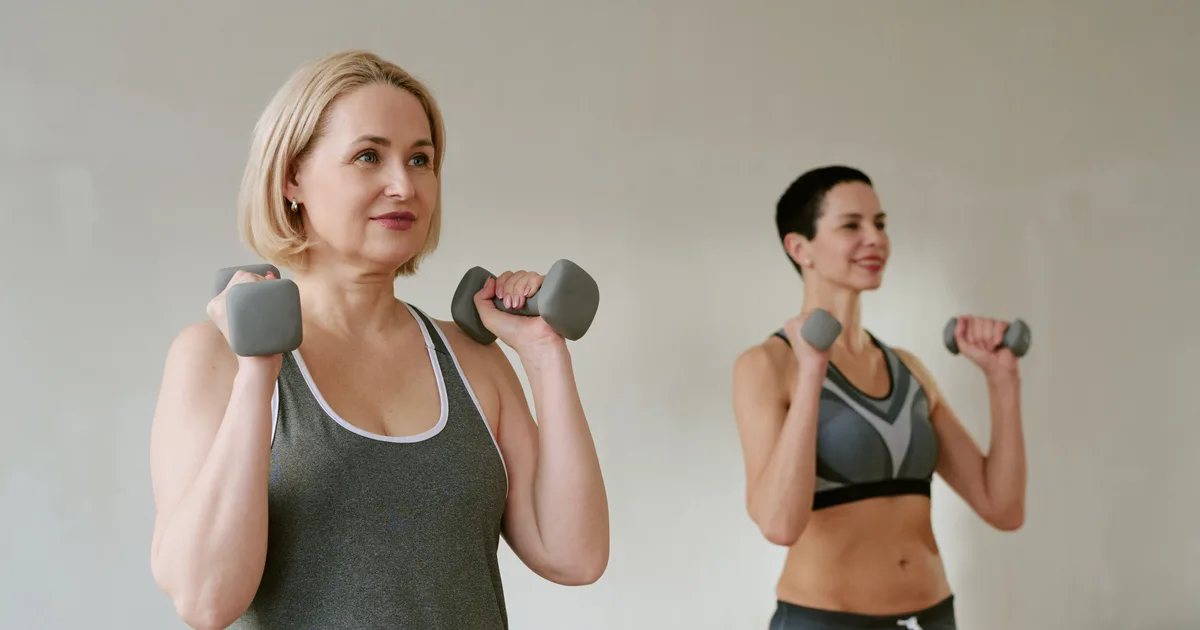
Second piece, the one that drops out of almost every conversation: muscle-strengthening activities working the major muscle groups, on two or more days a week. This is not an optional extra for people who want to get strong, it sits inside the basic health recommendation. We already explained why your heart does not live on running alone, and this is the official version of that.
Third piece, for those over 65: on top of the above, work on balance, coordination and strength. This is the part that protects against falls, which at that age are not a fright but a turning point.
And fourth piece, the most ignored of the lot: limit sedentary time. It is a separate recommendation, and training does not cover it. Sedentary behaviour, defined by the WHO as being awake while expending little energy, sitting, reclining or lying down, is independently associated with higher mortality and greater cardiovascular and cancer risk. You can hit your 150 minutes and spend the other 100 waking hours of the week sitting down. The WHO puts it plainly: if you spend a lot of time sitting, you need more physical activity to offset it.
What counts and what does not
This is where most people get a pleasant surprise. Walking briskly to work counts, carrying the shopping uphill counts, stairs count, dancing counts and playing properly with your kids counts. The WHO stresses that all activity counts and that some is better than none. It does not have to be sport in sports kit to add up, and brisk walking after forty has measurable effects all on its own.
The only condition is intensity: moderate means you notice you are breathing harder and can talk, but not sing. Strolling past shop windows does not qualify. Hurrying for the train you are about to miss does.
A September week that actually fits
- Monday, Wednesday, Friday: 20 minutes walking briskly there and 20 back. That is 120 minutes and you have not set foot in a gym.
- Tuesday and Thursday: 25 minutes of strength work at home. Squats, pushes, pulls and some core. There go your two obligatory days.
- Saturday: a good hour of whatever you fancy, bike, hills or track. That takes you past 150 and into the useful range.
- Every day: five minutes on your feet for every hour sitting down. This is the sedentary box, and the one most often forgotten.
- Sunday: rest, guilt-free. That is part of the plan too.
If you are starting from zero
The most useful line in the whole WHO fact sheet is not a figure, it is this idea: any amount of physical activity is better than none. If you are at zero right now, your target this week is not 150 minutes, it is 40. And next week, 60.
If it helps for those minutes to have a destination rather than just a stopwatch, give them a small one: ten kilometres accumulated is a couple of weeks of brisk walking, and it has the advantage that you can see the finish from day one. Which is, in the end, what all of this is about: making the floor stop looking like a ceiling.

You already have your challenge.
All that's left is to start it.
Join this challenge and every workout gets you closer to your medal.
More from the Victoris Diary
 Vida saludable
Creatine after 45: what the study says (and what it does not)
A Texas A&M study in people aged 45 to 65 suggests creatine helps build muscle and strength even without training. We go through the results, the small print and what to check before buying a tub.
 Vida saludable
Walk your way to better sleep: your 25-week plan, step by step
A meta-analysis of 200 trials places walking among the exercises that most improve sleep, especially if you sleep badly now. Here is a phased plan, with honesty about what science does not yet know.
 Vida saludable
The exercise you choose protects your brain (work, not so much)
A meta-analysis of more than 4 million people links leisure-time exercise to a 24% lower risk of dementia, but not physical activity at work. Here is why chosen movement makes the difference.